
Antique Japanese Meiji Cloisonné Vase Phoenix & Floral Panels c.1880 30cm
$483.12
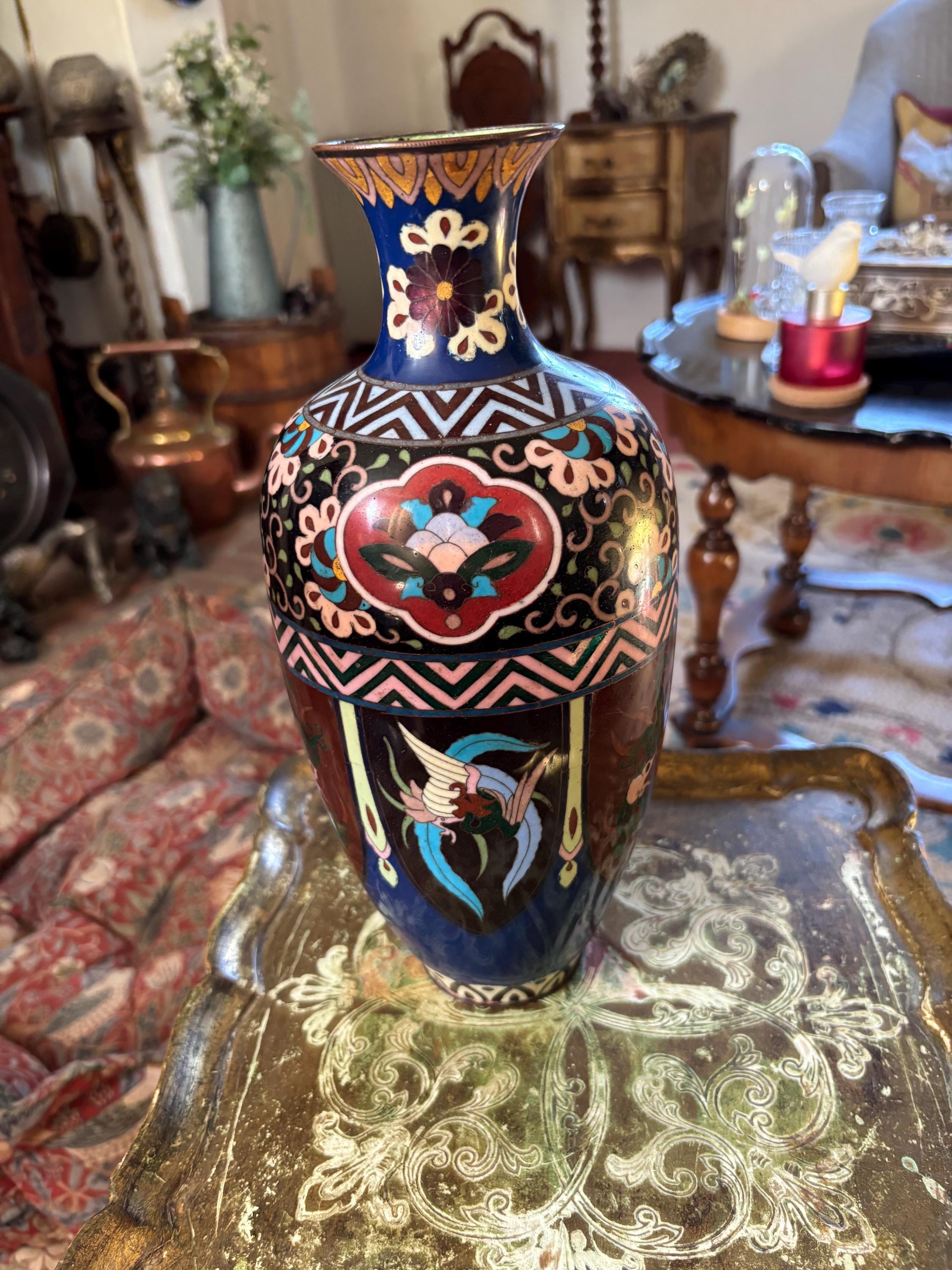
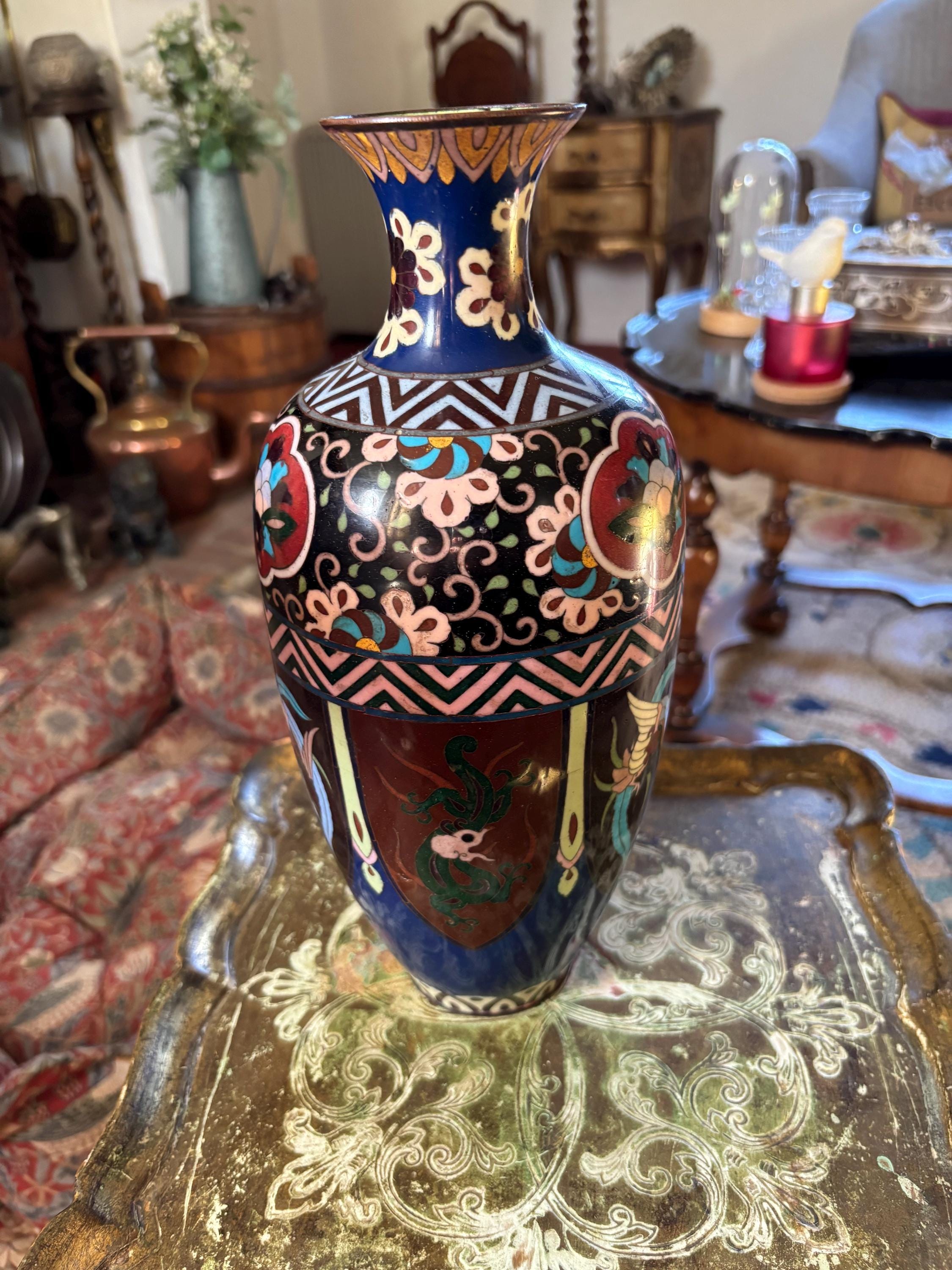
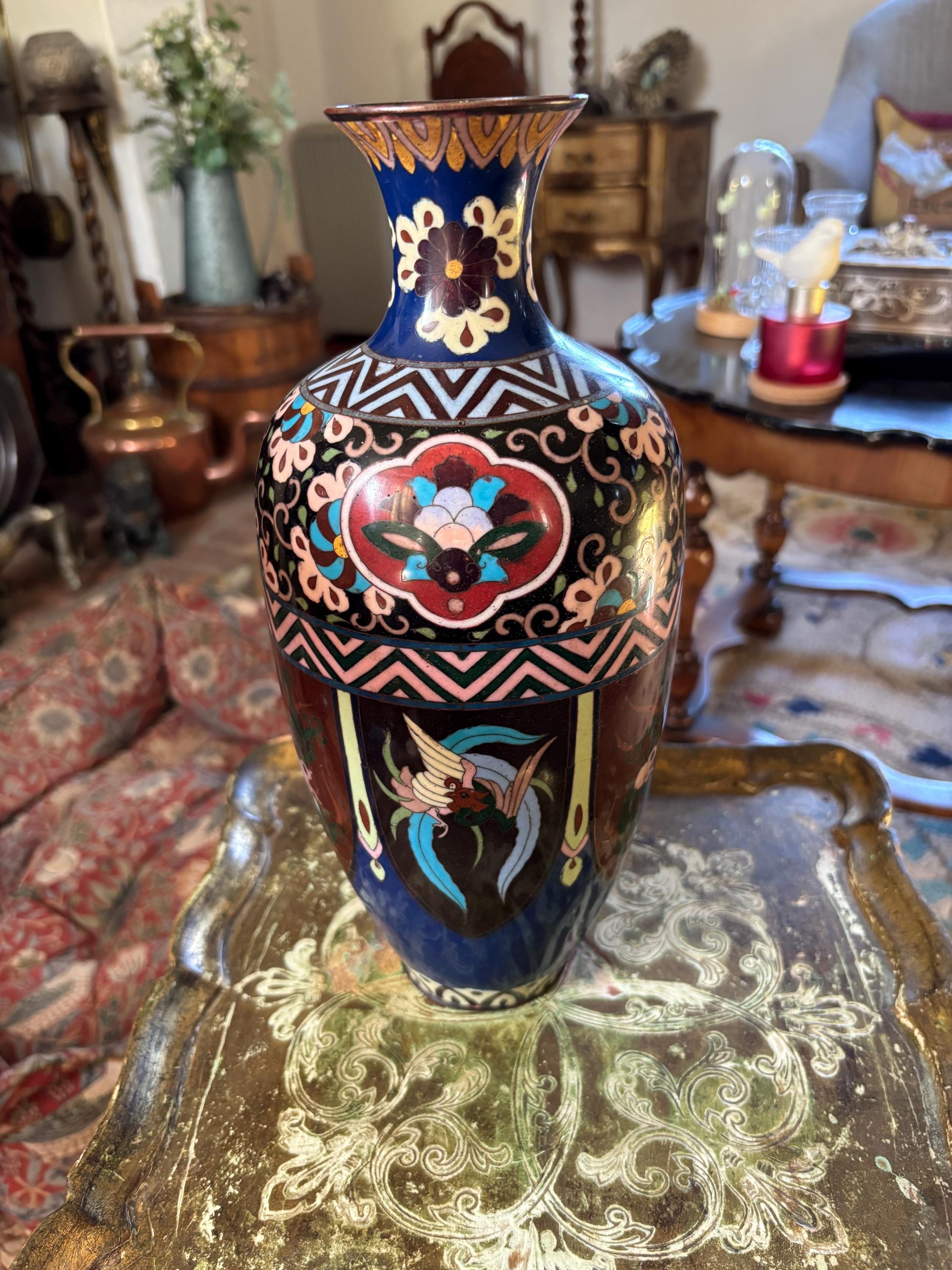
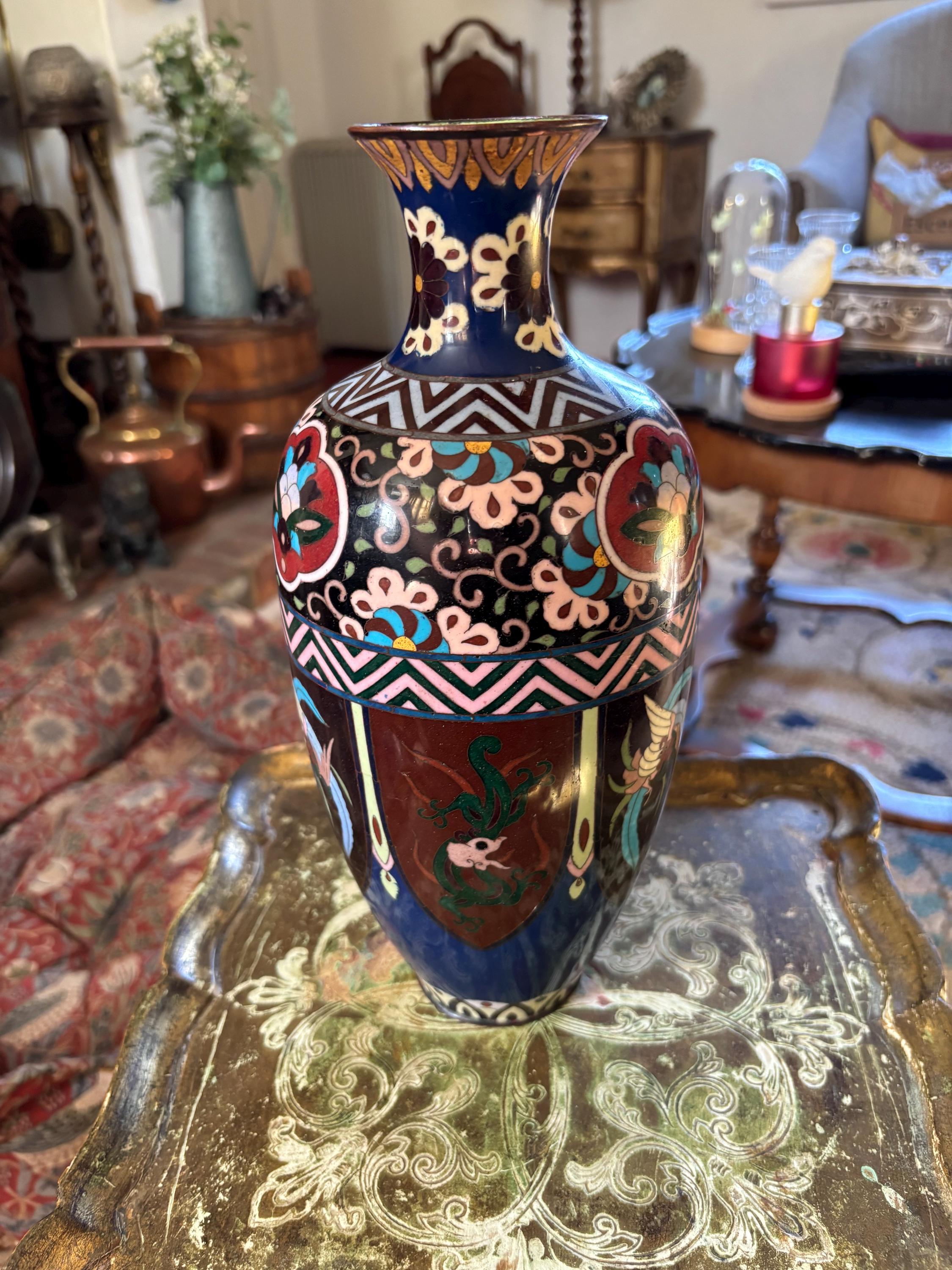
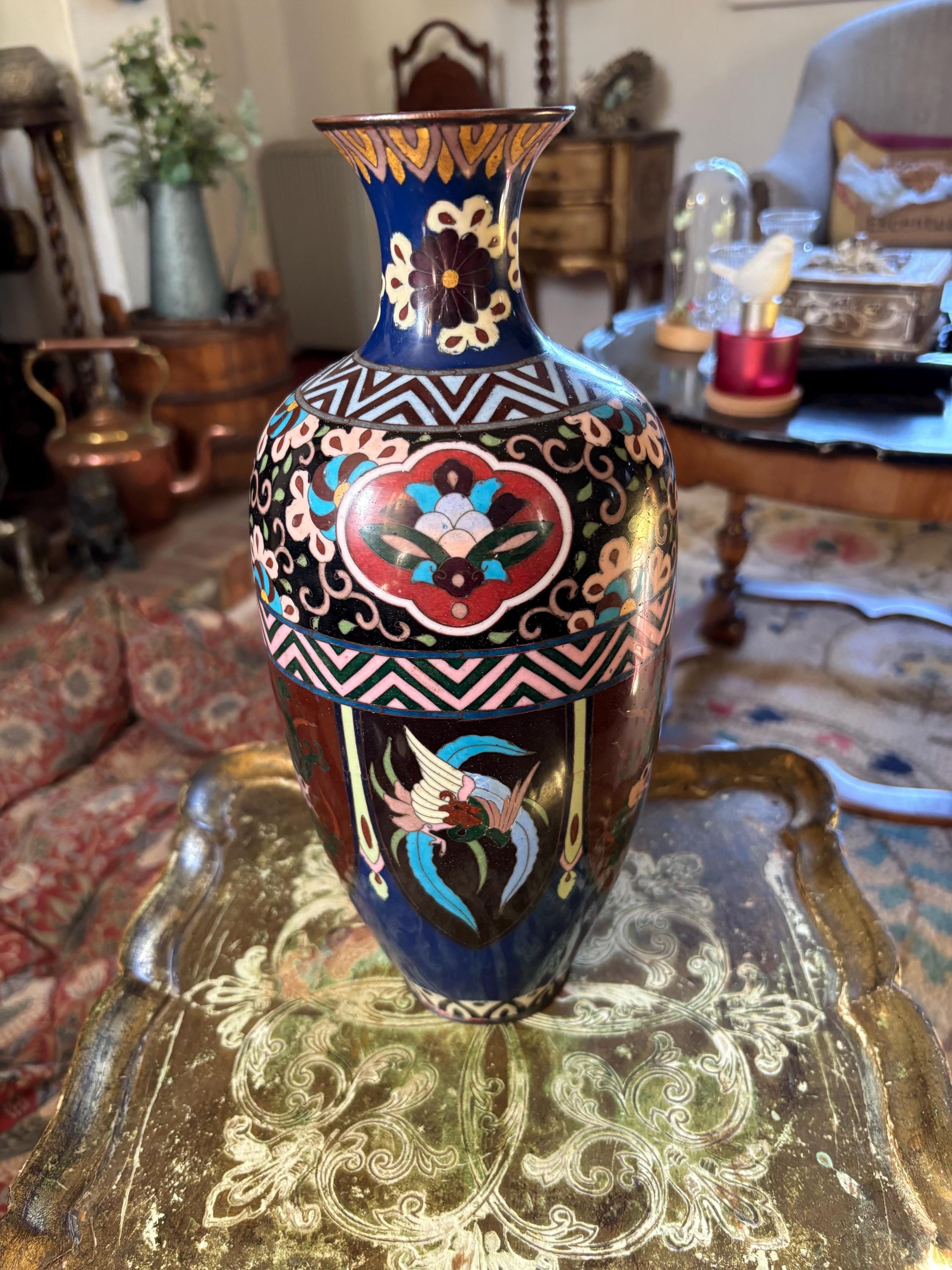
A striking large antique Japanese cloisonné enamel vase dating from the Meiji period (1868–1912), most likely the late 19th century, circa 1880–1900.
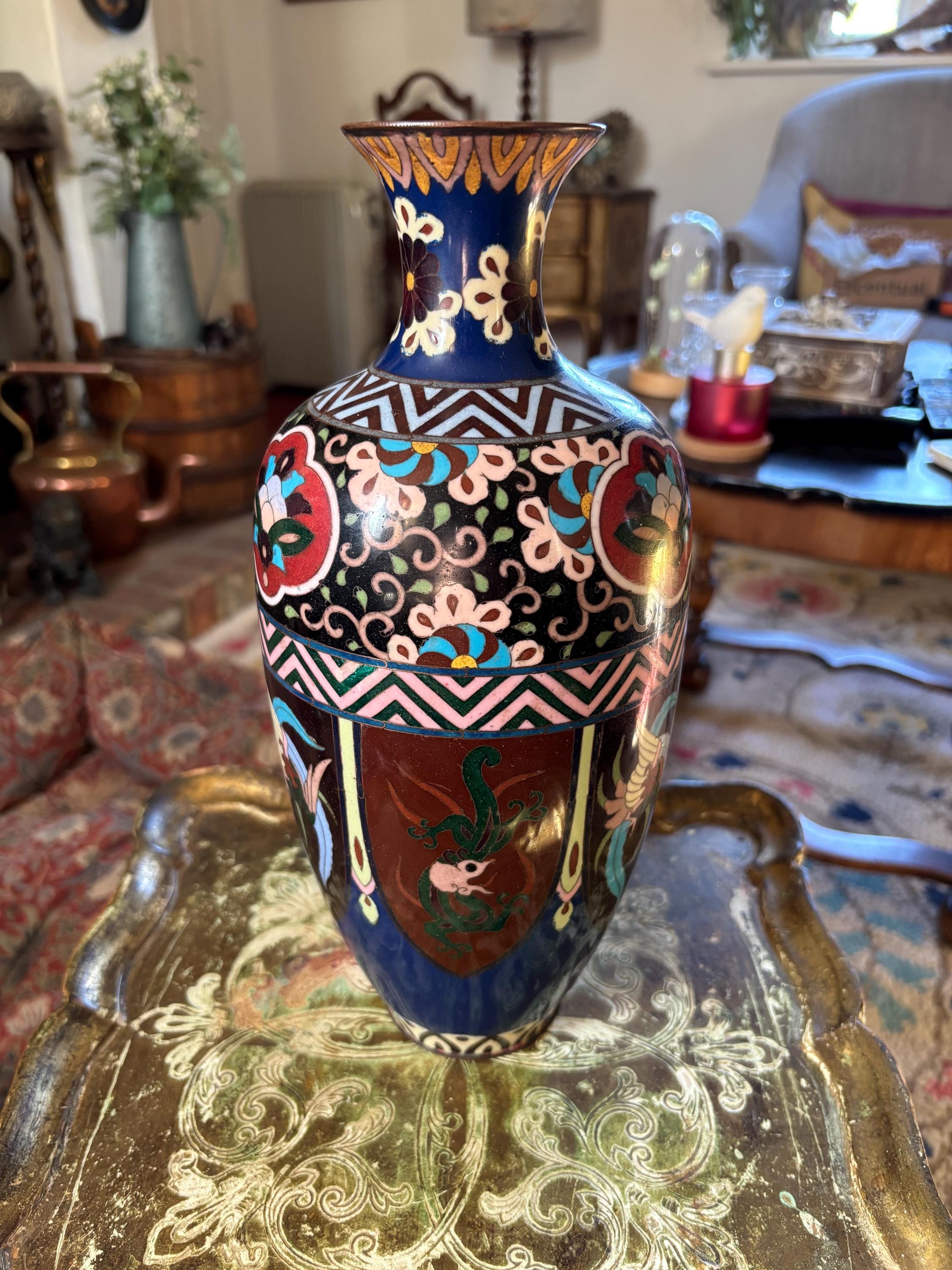
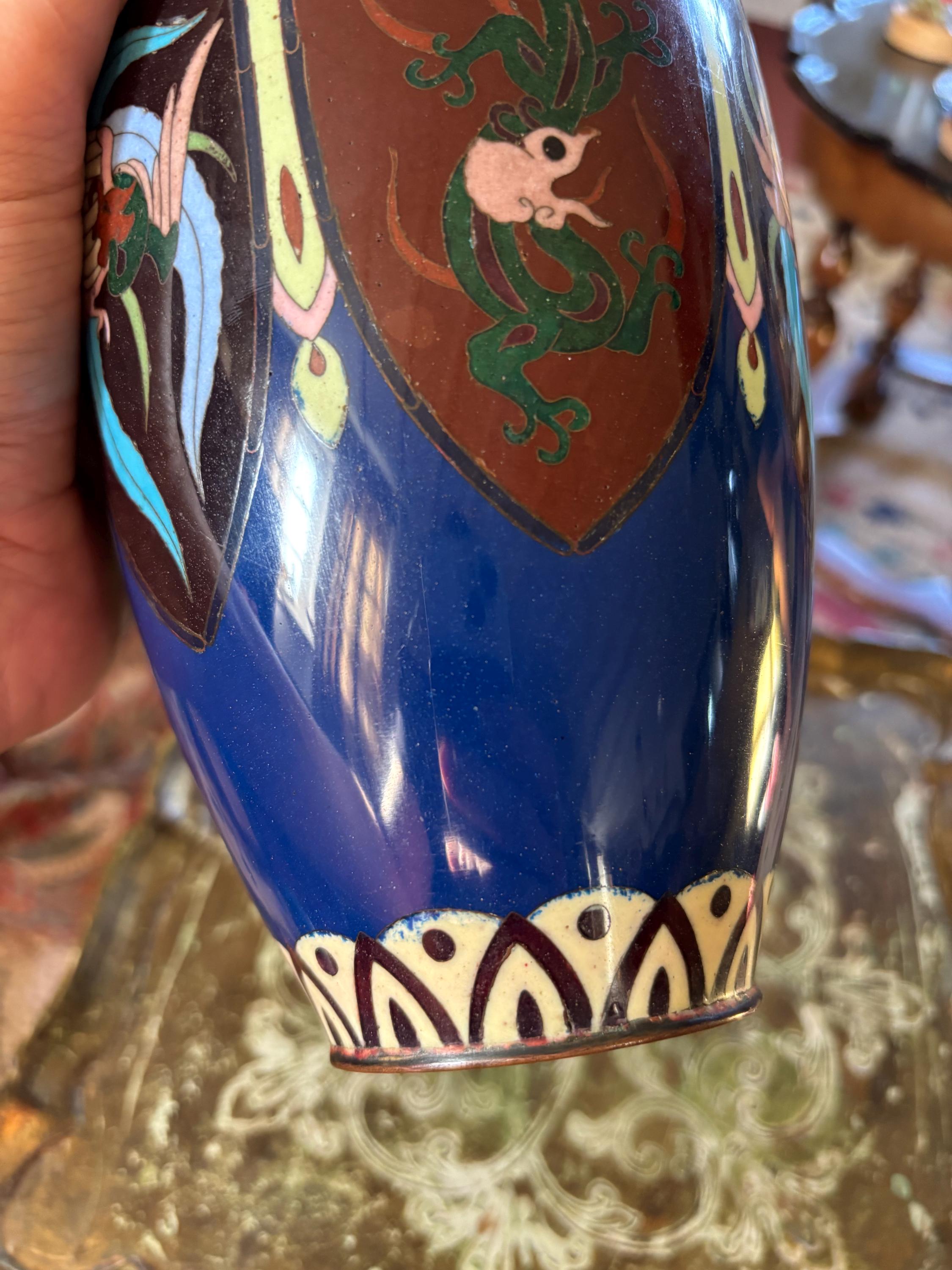
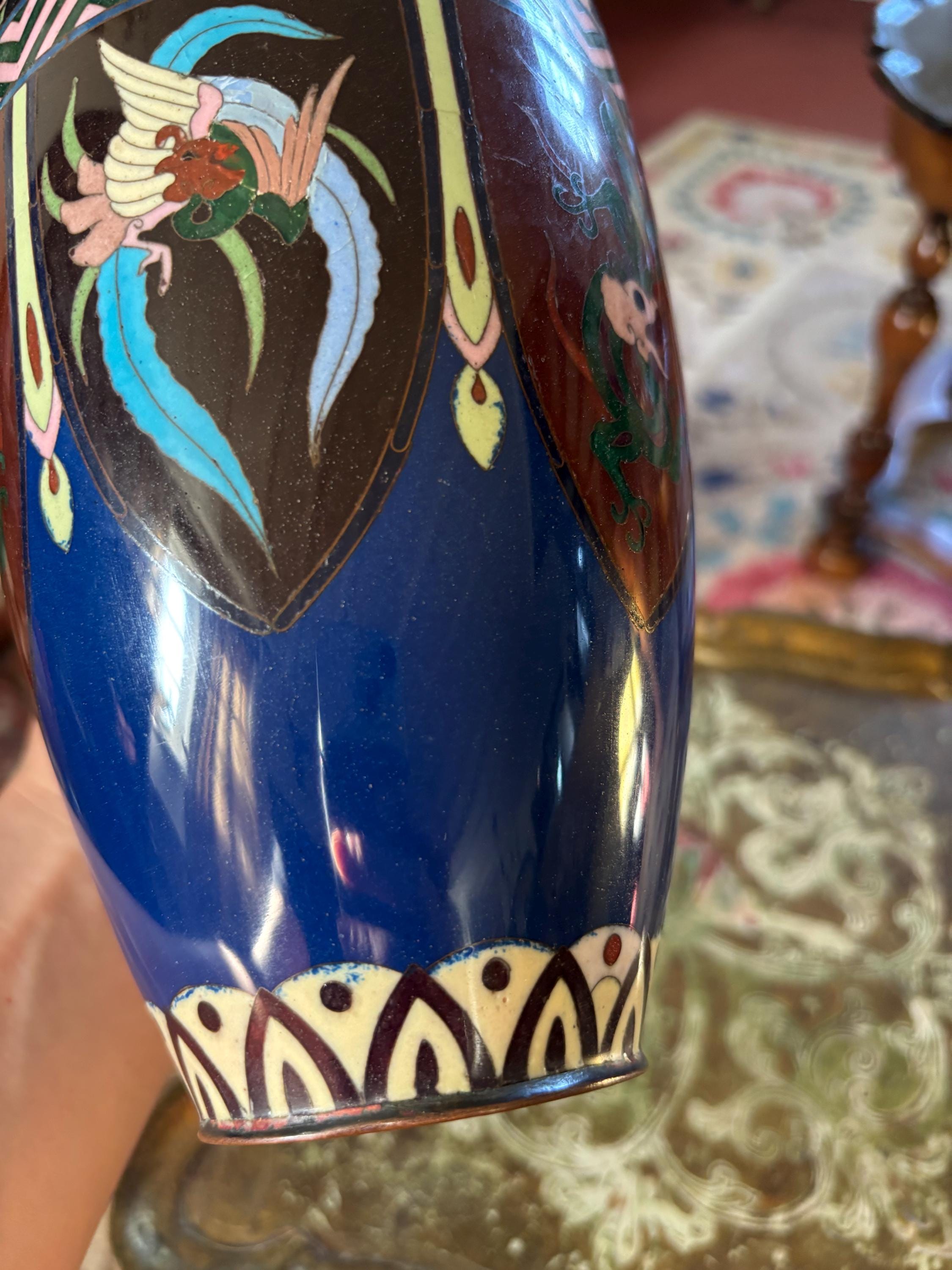
Standing approximately 30 cm tall, the vase has an elegant baluster form with a long flared neck and is richly decorated in an unusually varied palette of deep cobalt blue, black, turquoise, pink, green, cream, red and brown.
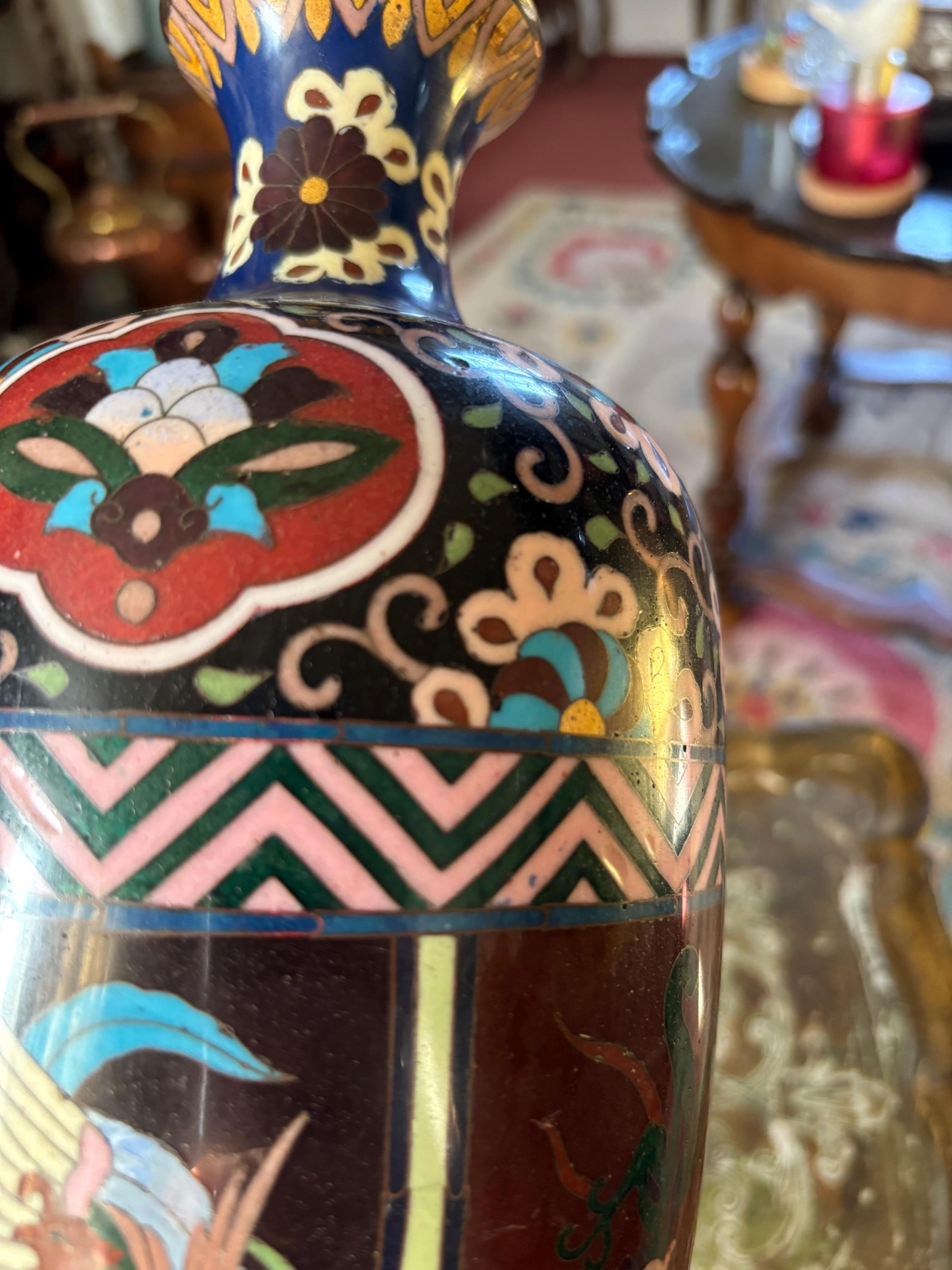
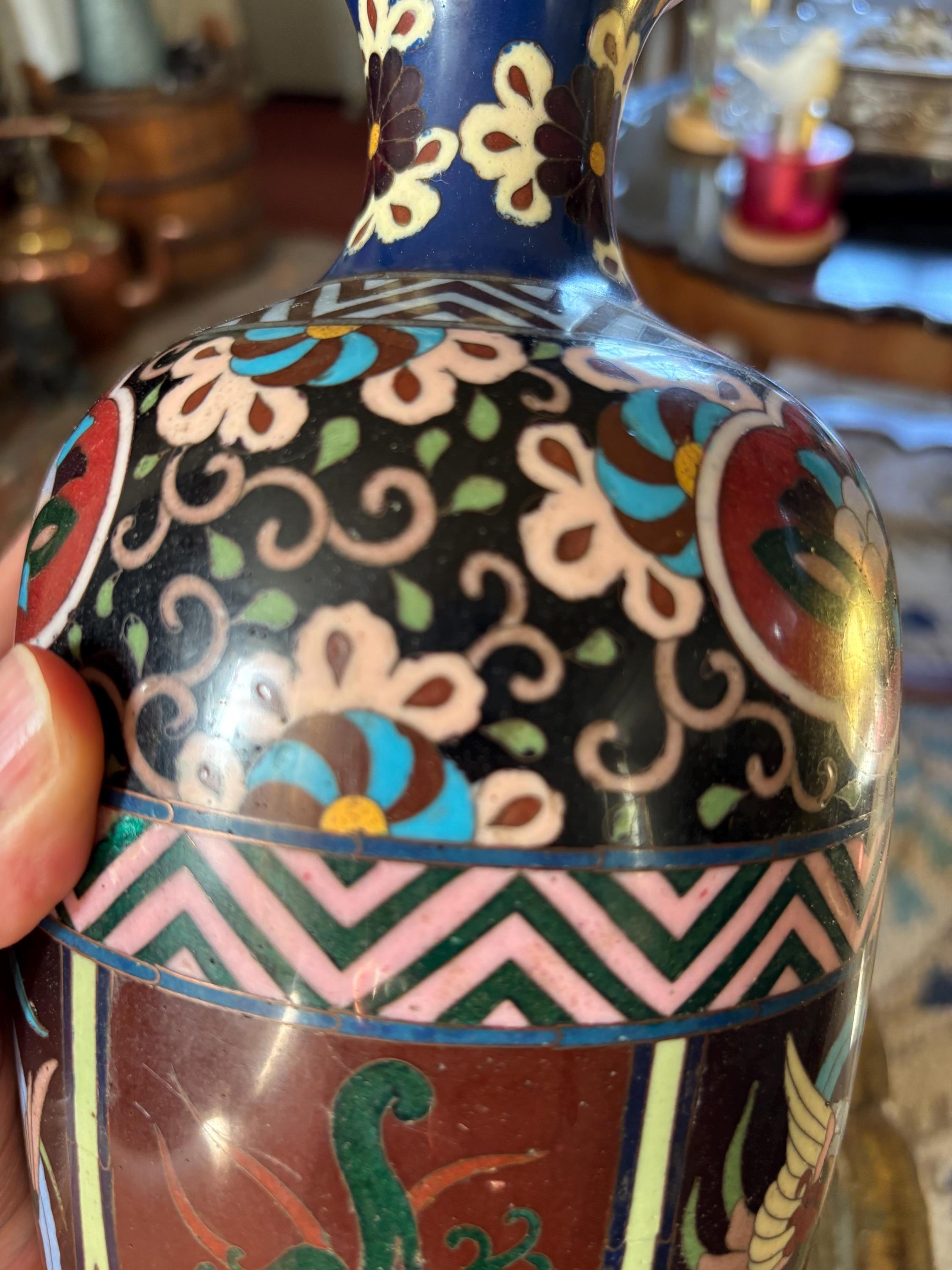
The main body is divided into decorative shield-shaped reserves featuring stylised mythical birds, including phoenix or hō-ō type motifs, surrounded by elaborate floral and foliate decoration. Above these is a particularly attractive black-ground band filled with stylised flowers and scrolling foliage.
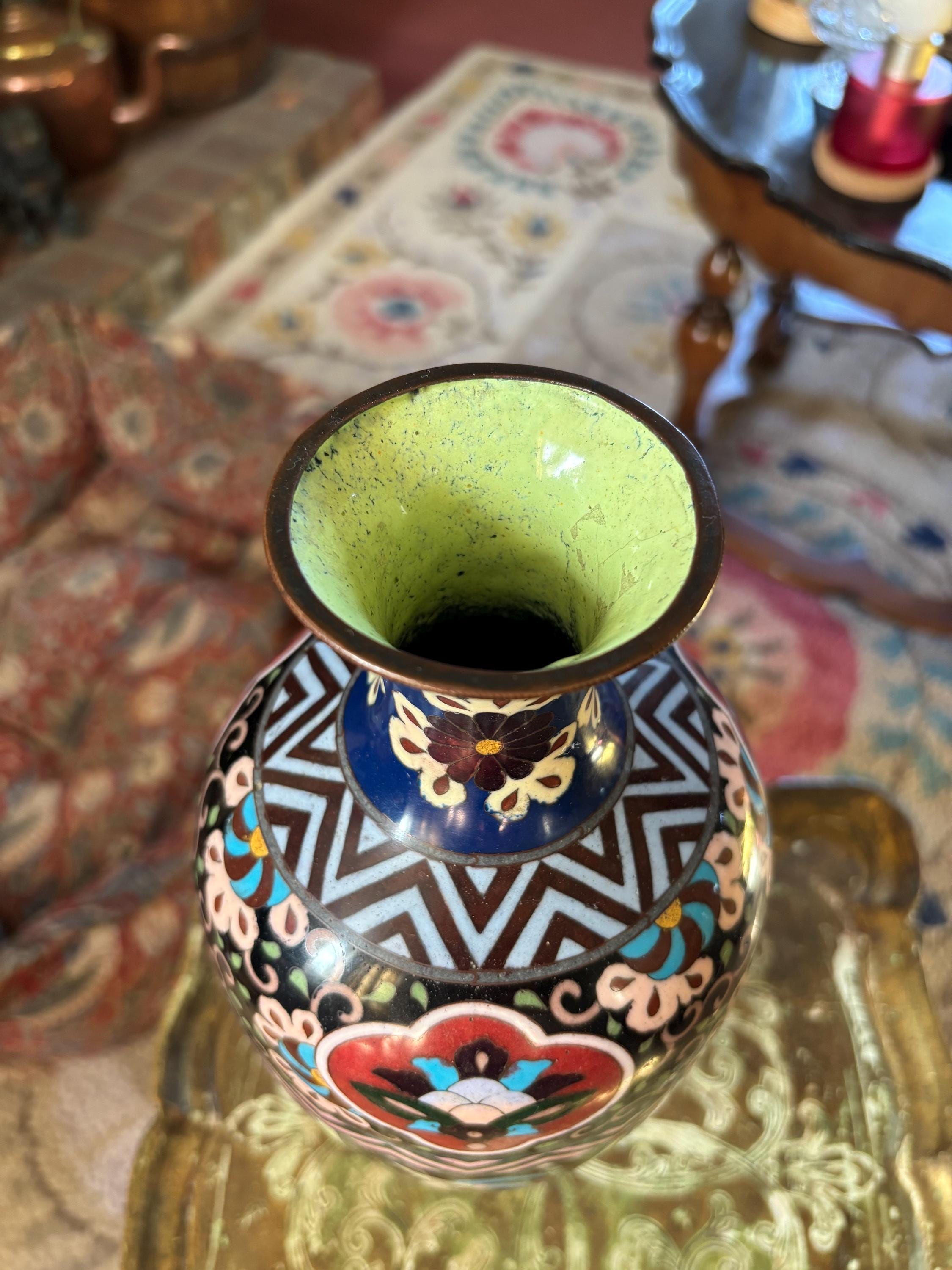
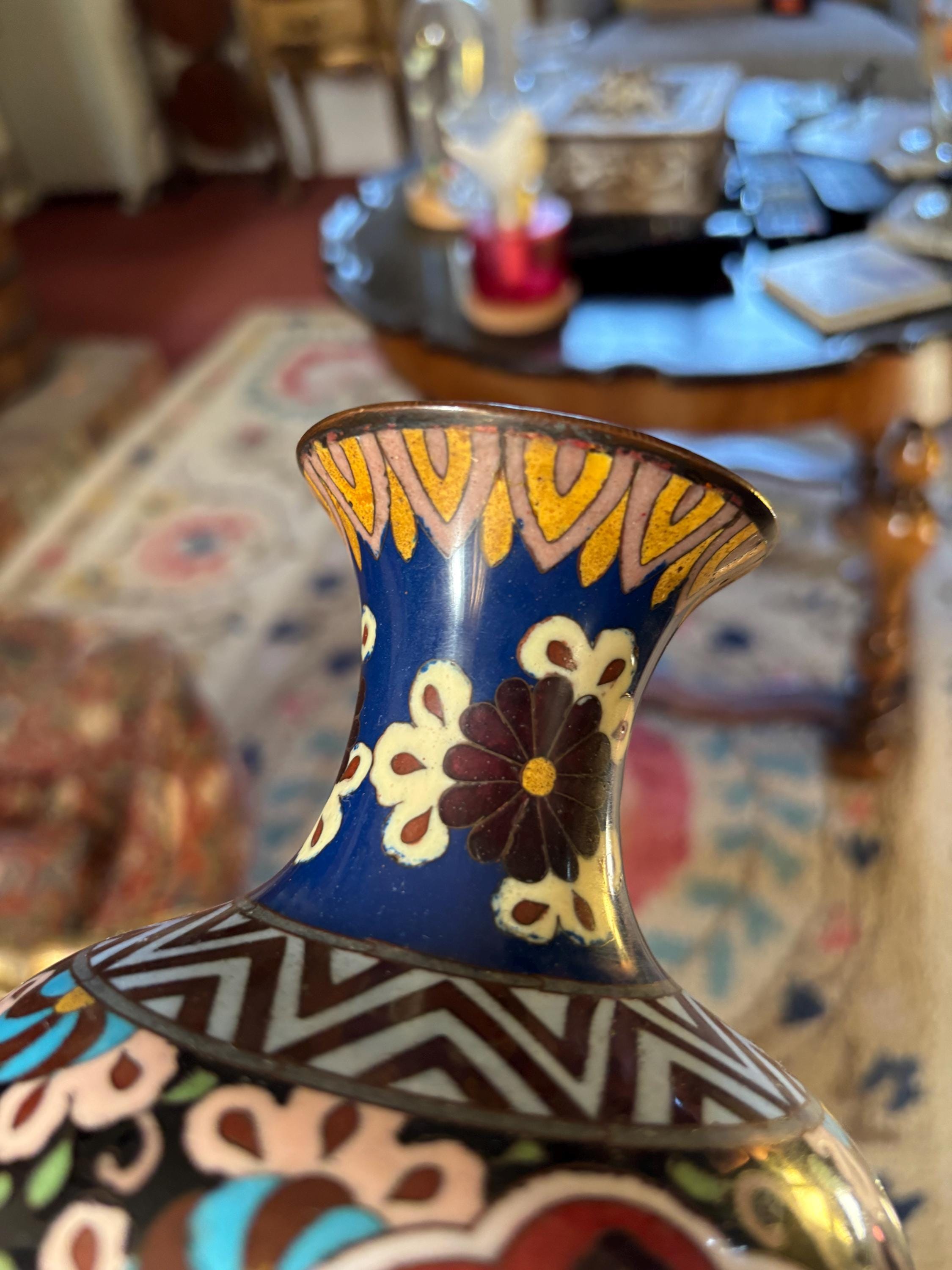
A series of geometric borders adds further interest, including bold pink and green chevron decoration around the body and contrasting geometric ornament around the shoulder and flared rim. The neck is decorated with stylised chrysanthemum-like flowers against a rich cobalt-blue ground.
The combination of mythical birds, floral ornament and strongly contrasting geometric borders gives the vase the wonderfully exuberant appearance associated with Japanese decorative arts produced during the Meiji period.
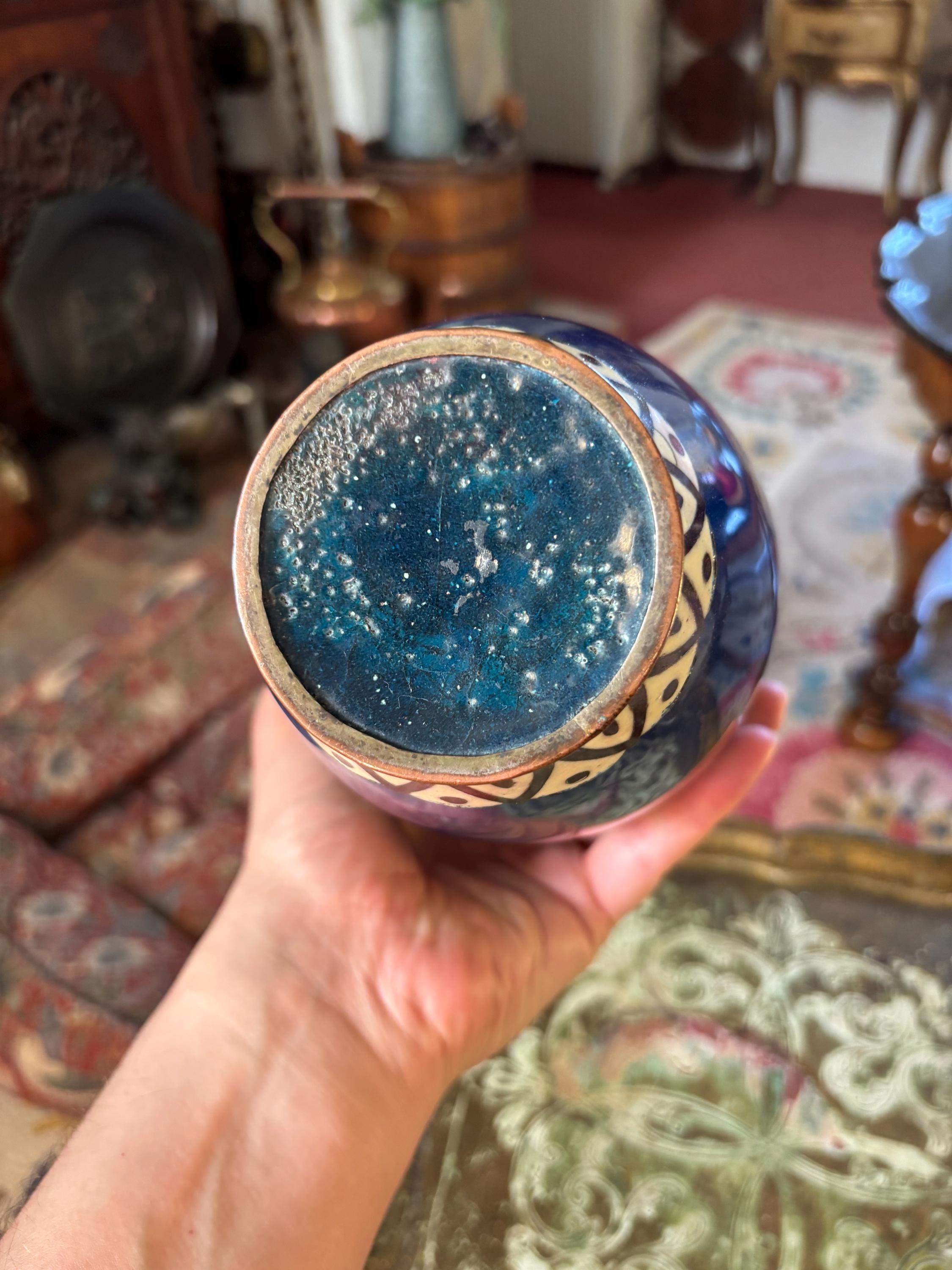
The vase is unsigned. The underside has a recessed turquoise enamelled base surrounded by a metal foot rim.
Dimensions
Height: approximately 30 cm
Maximum diameter: approximately 12.5 cm
Weight: approximately 690 g
Condition
Antique condition with age-related surface wear, light scratches, small firing imperfections/pitting and wear to the metal rims. There is crazing and age-related wear to the enamel inside the neck.
Please study all photographs carefully as these form an important part of the description and show the condition and decorative detail.
A substantial and highly decorative example of antique Japanese cloisonné that displays beautifully and would make an excellent addition to a collection of Meiji-period Japanese art, Asian antiques or antique enamelwork.
Dating: Meiji period (1868–1912), probably circa 1880–1900.
Please note that the attribution and dating are based upon the construction, materials, decorative style and appearance of the piece. It is unsigned and no specific workshop or artist is attributed.
0 items in your cart