
Meiji Japanese Cloisonné Phoenix Vase | Fine Silver Wire Enamel, Cobalt Blue Interior
$693.17
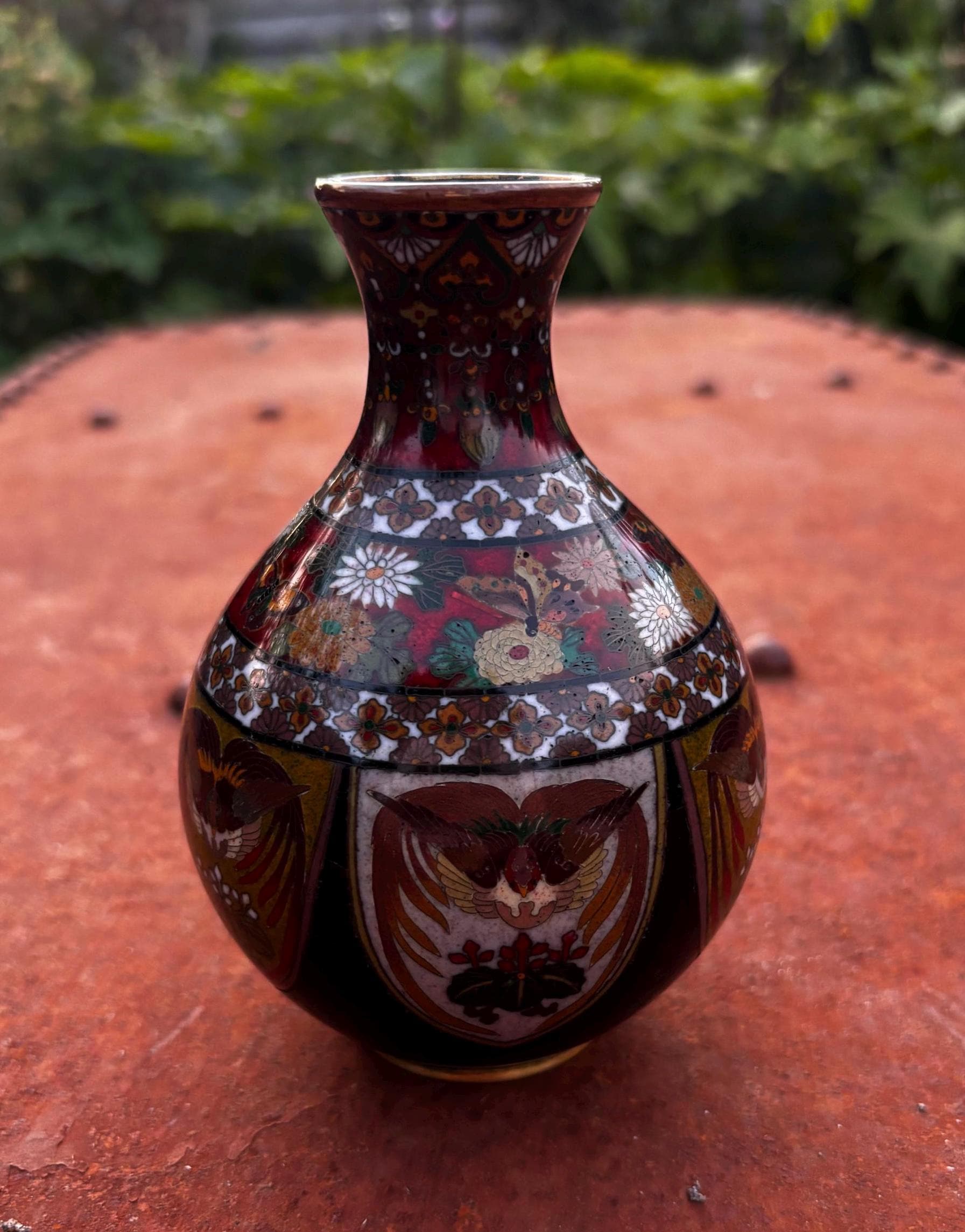
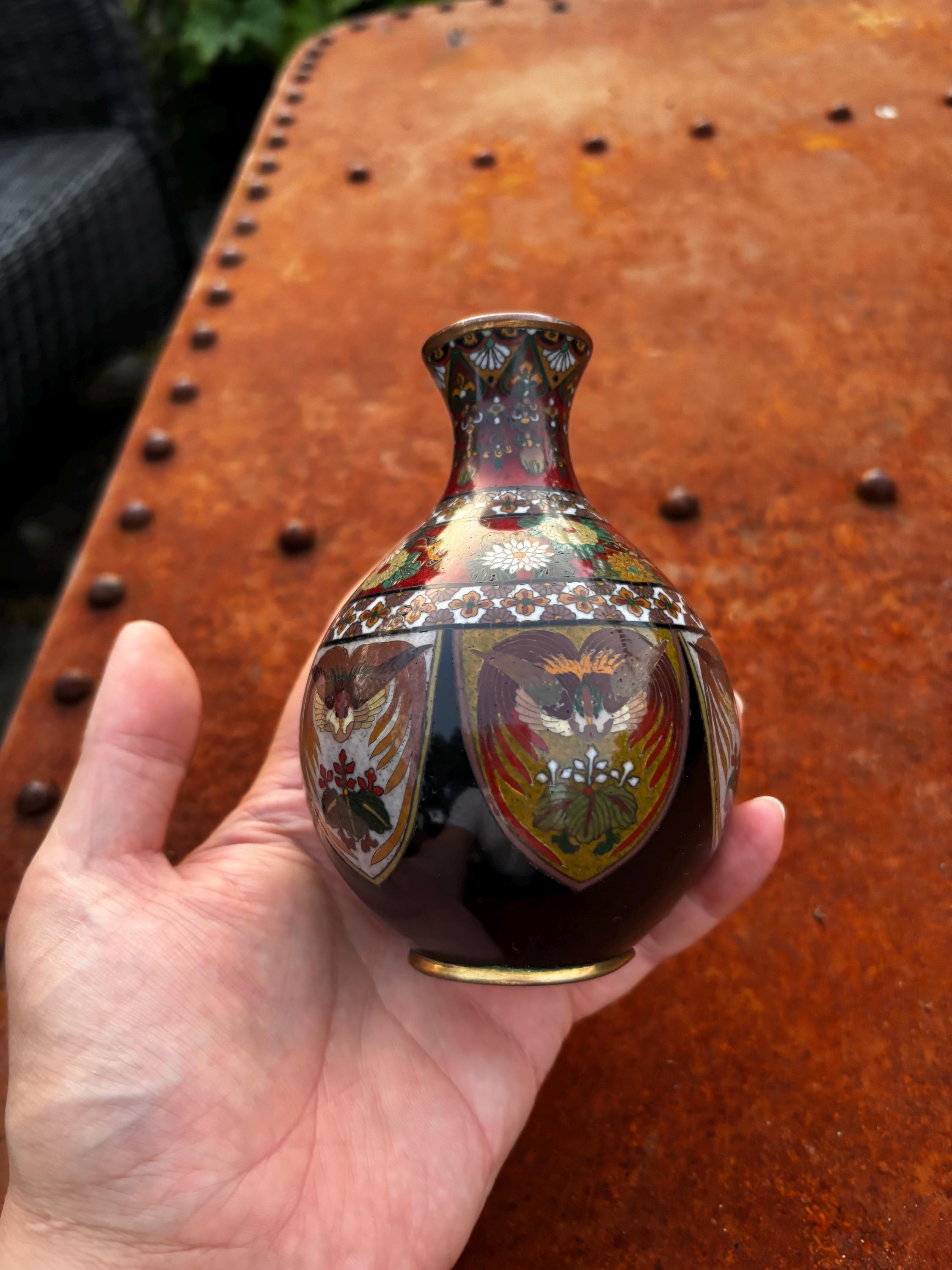
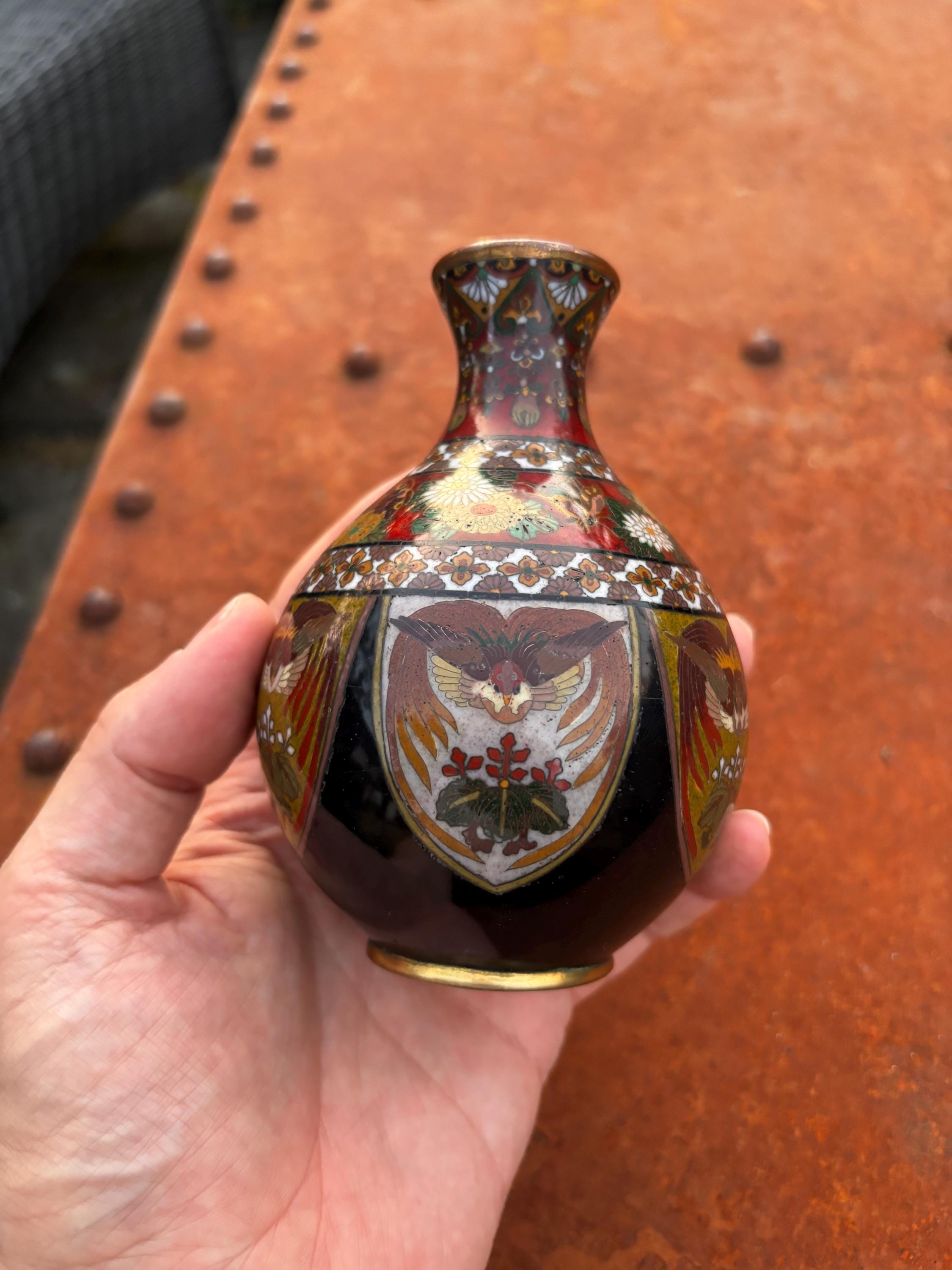
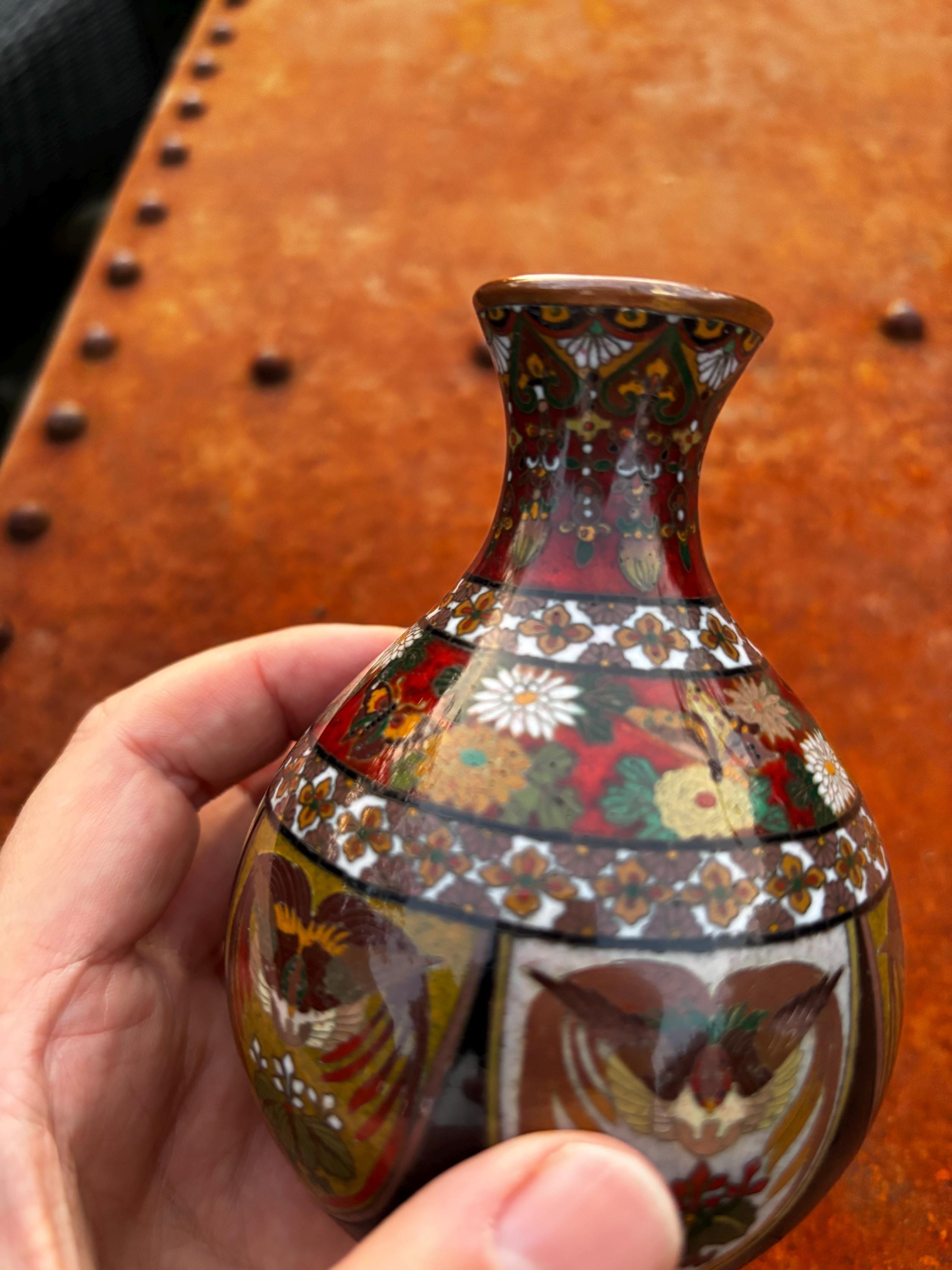
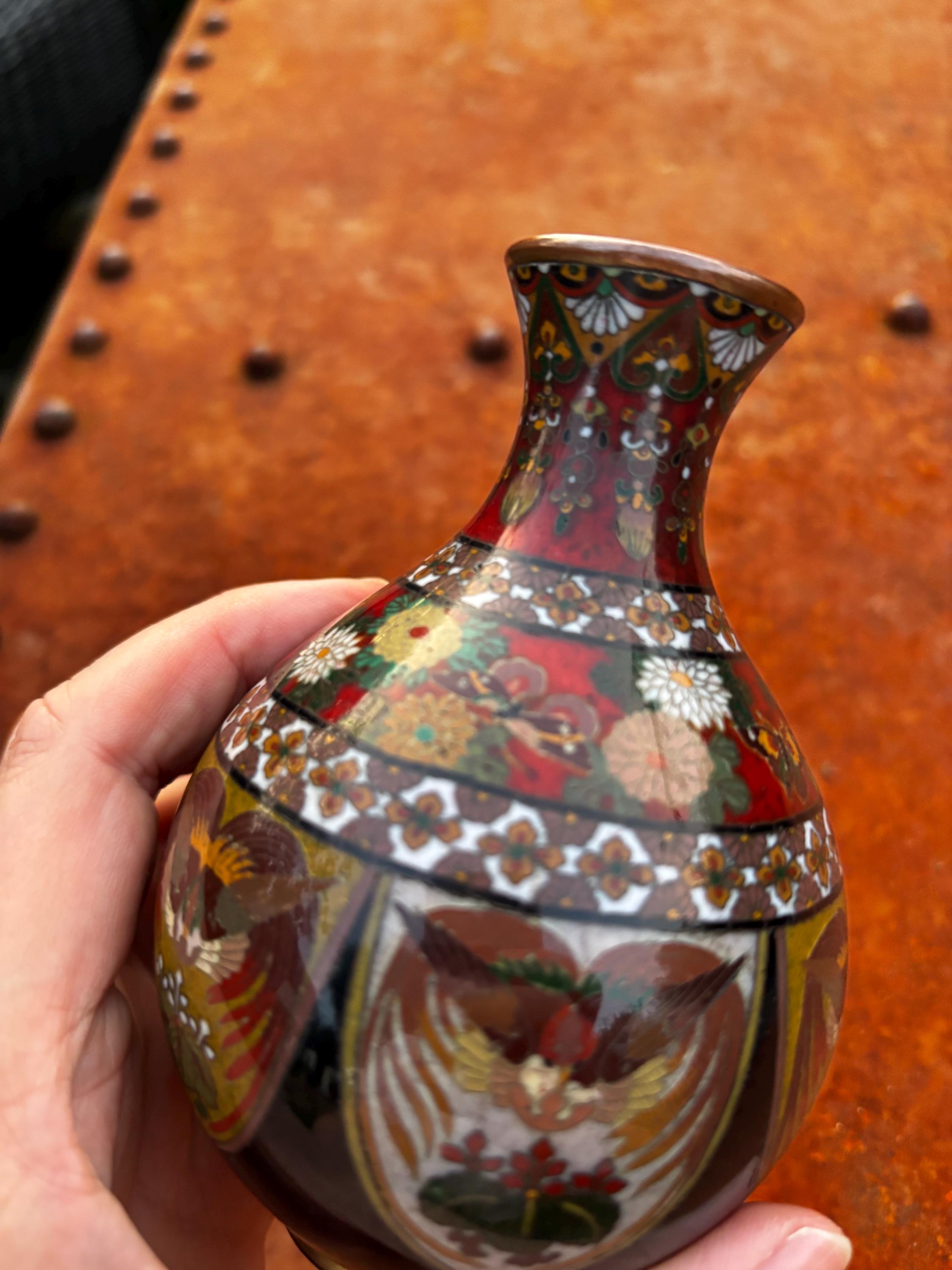
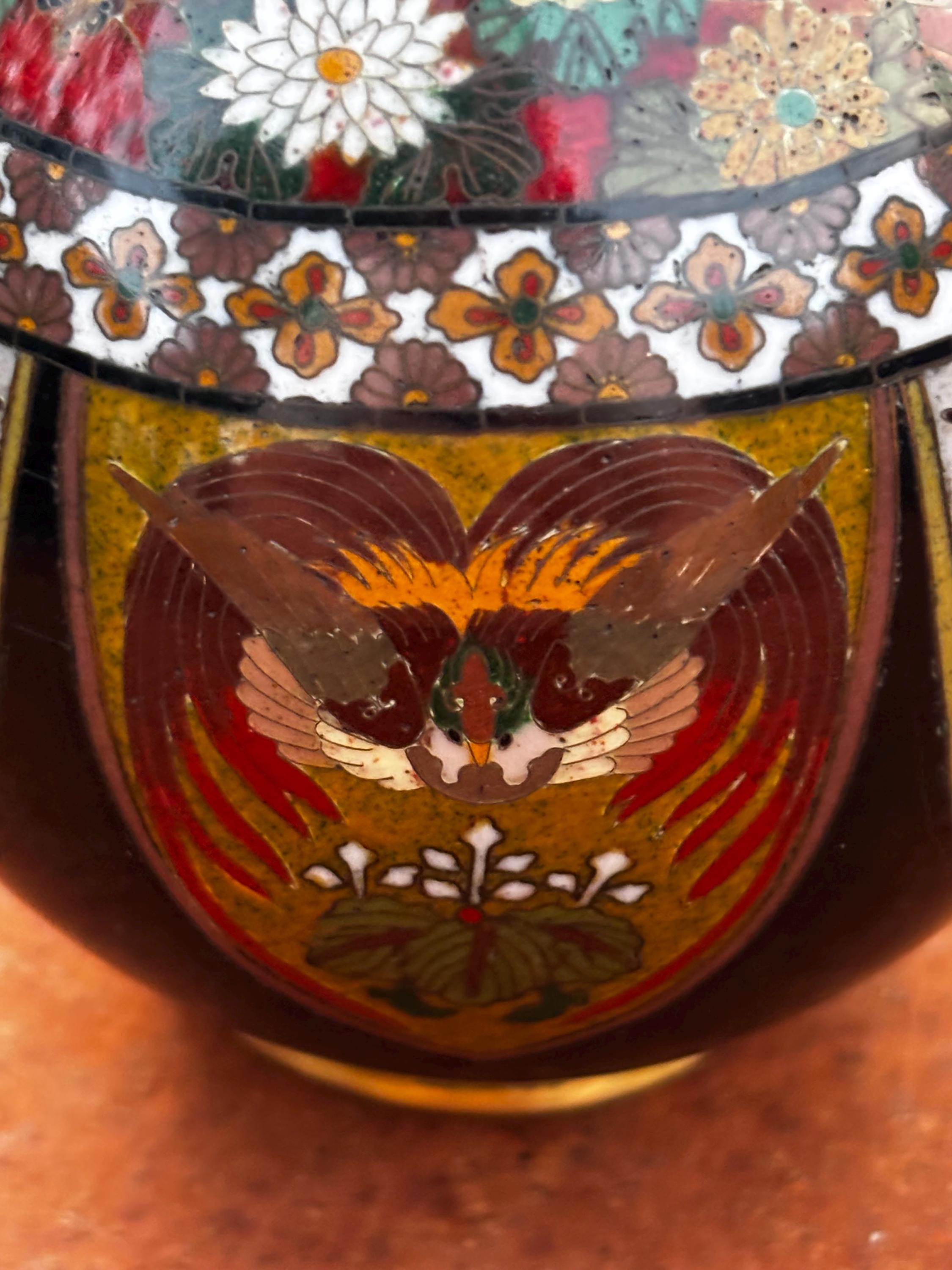
A beautiful and highly decorative authentic Japanese Meiji period cloisonné vase, dating to approximately 1885-1900, showcasing exceptionally fine workmanship and one of the most desirable motifs in Japanese decorative art, the Hō-ō (Phoenix).
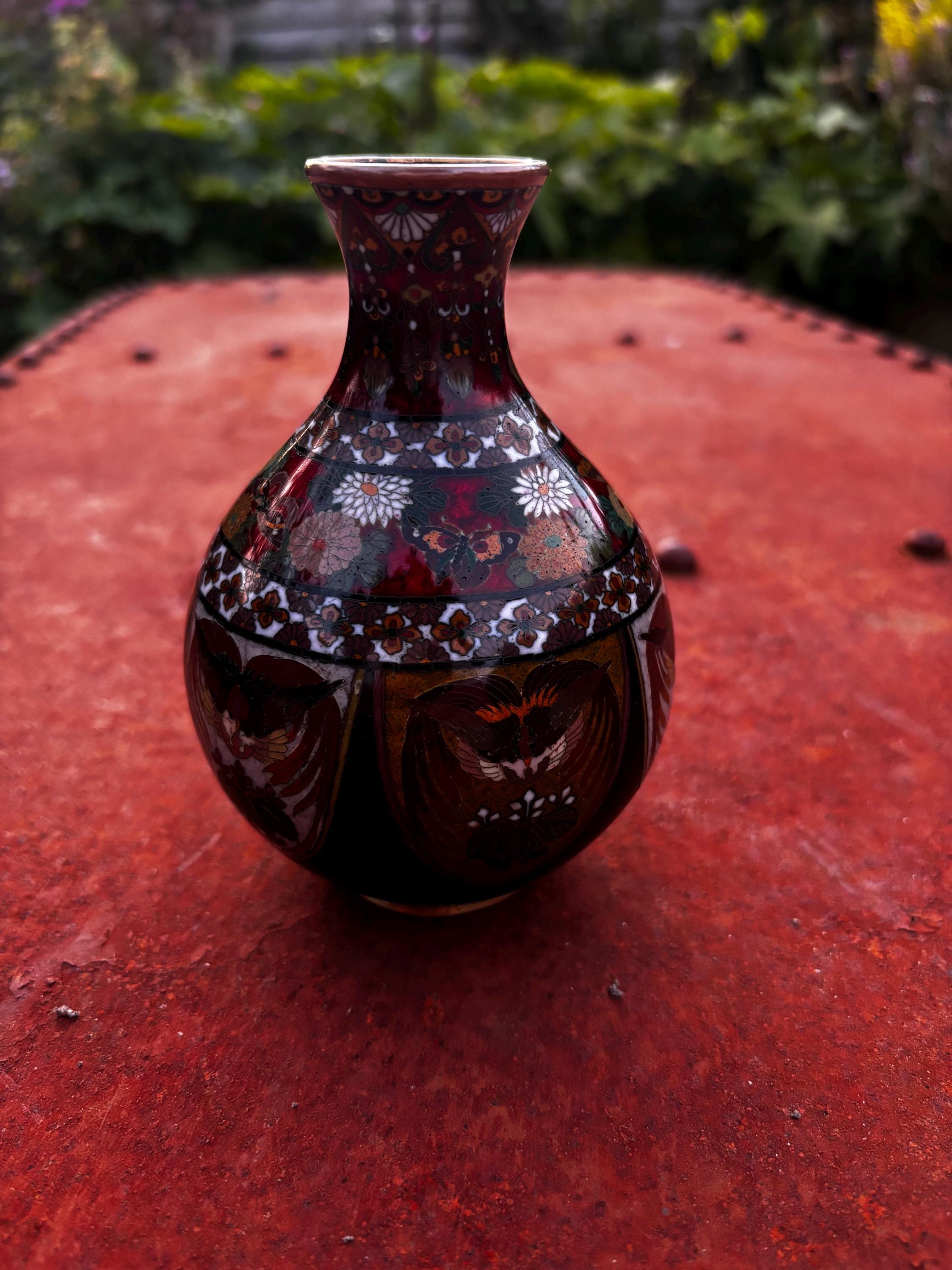
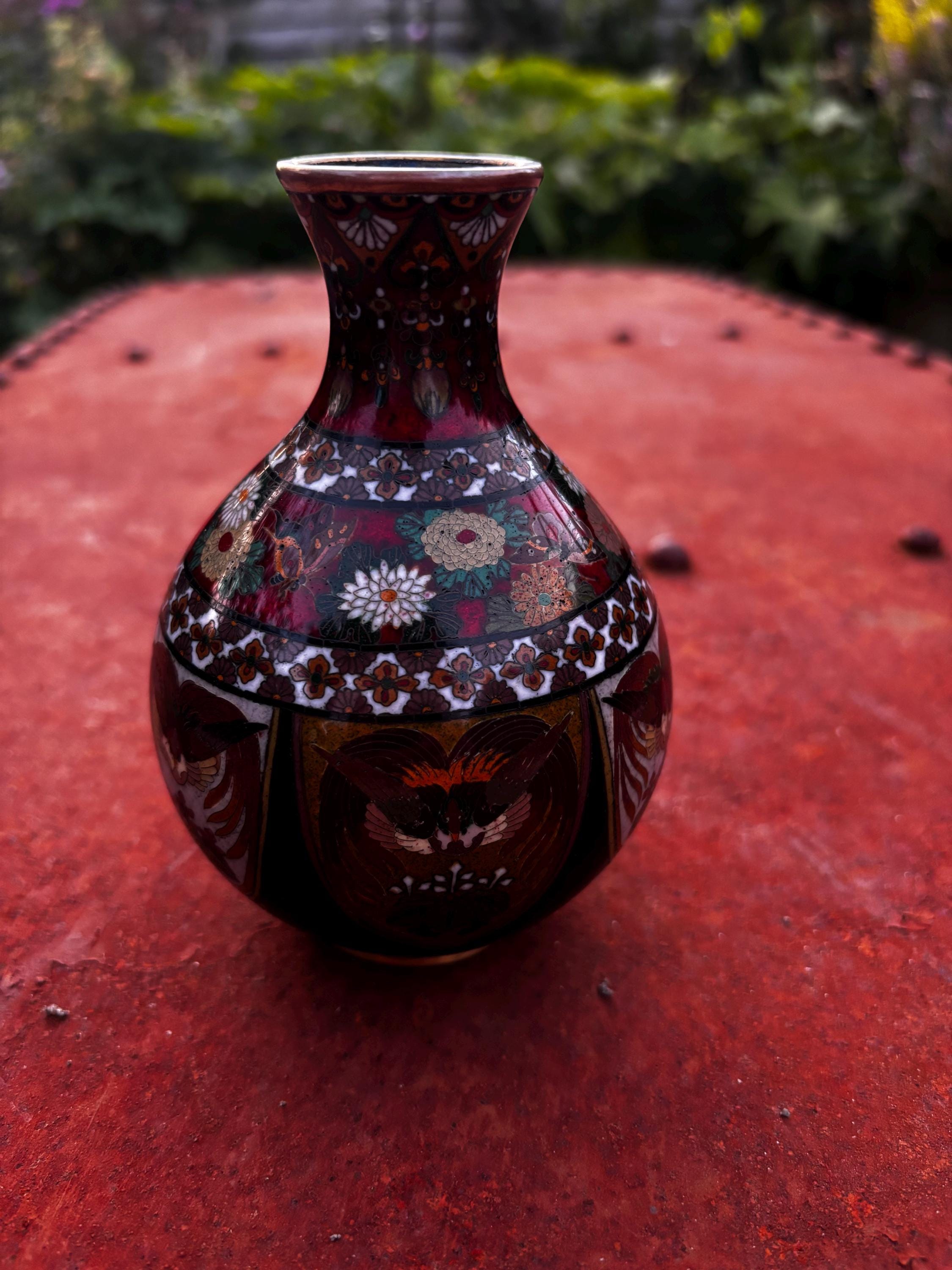
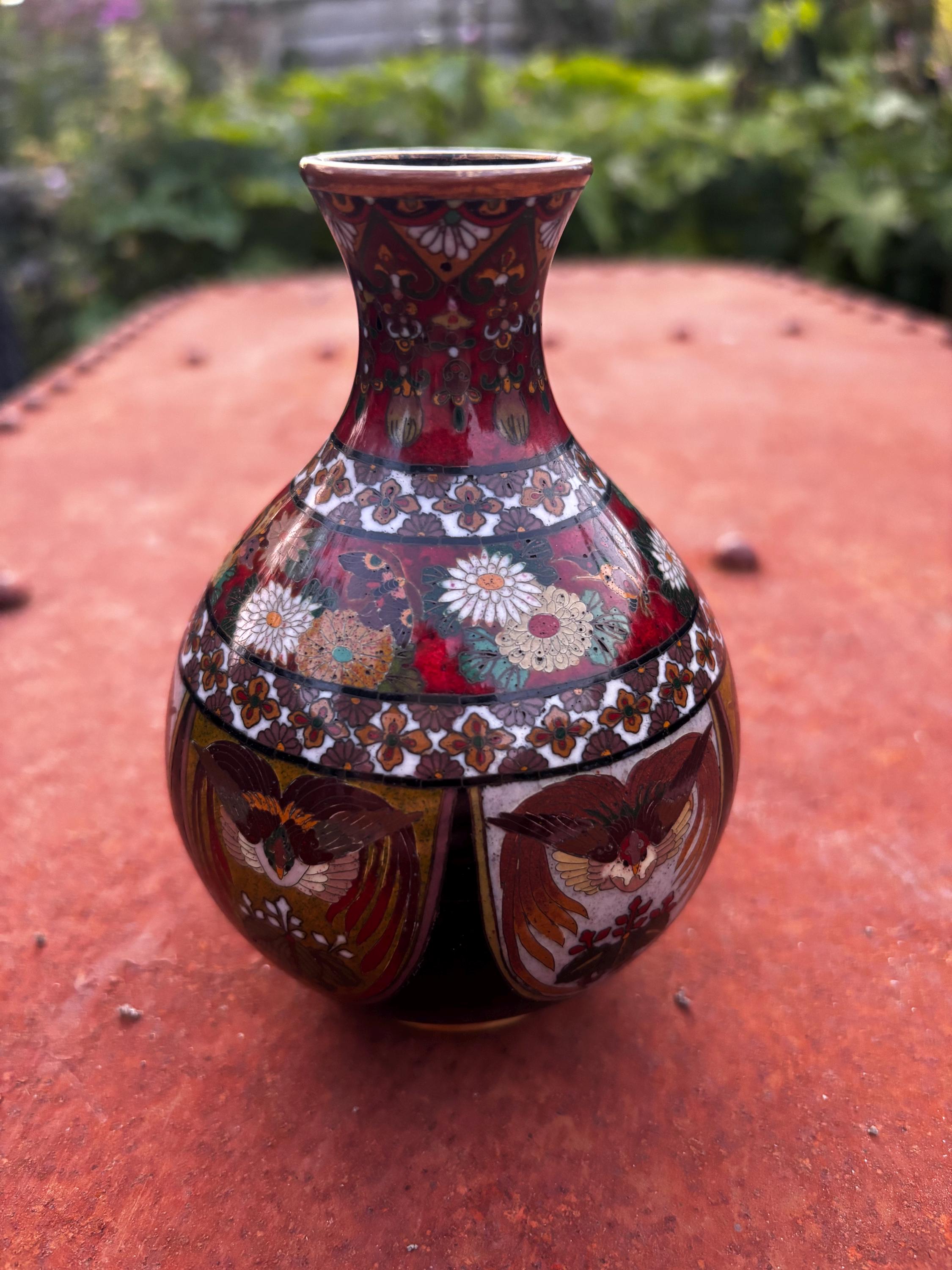
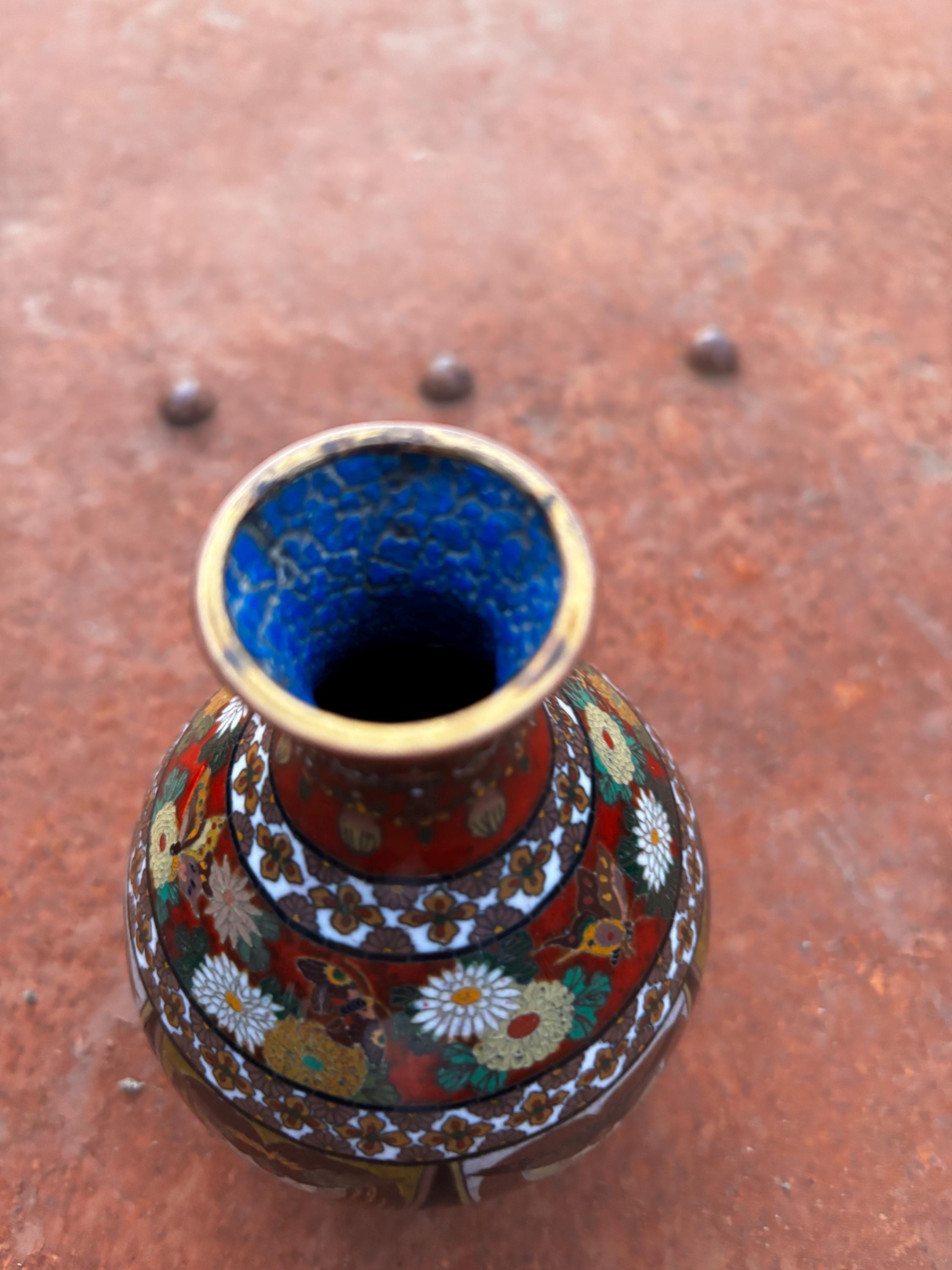
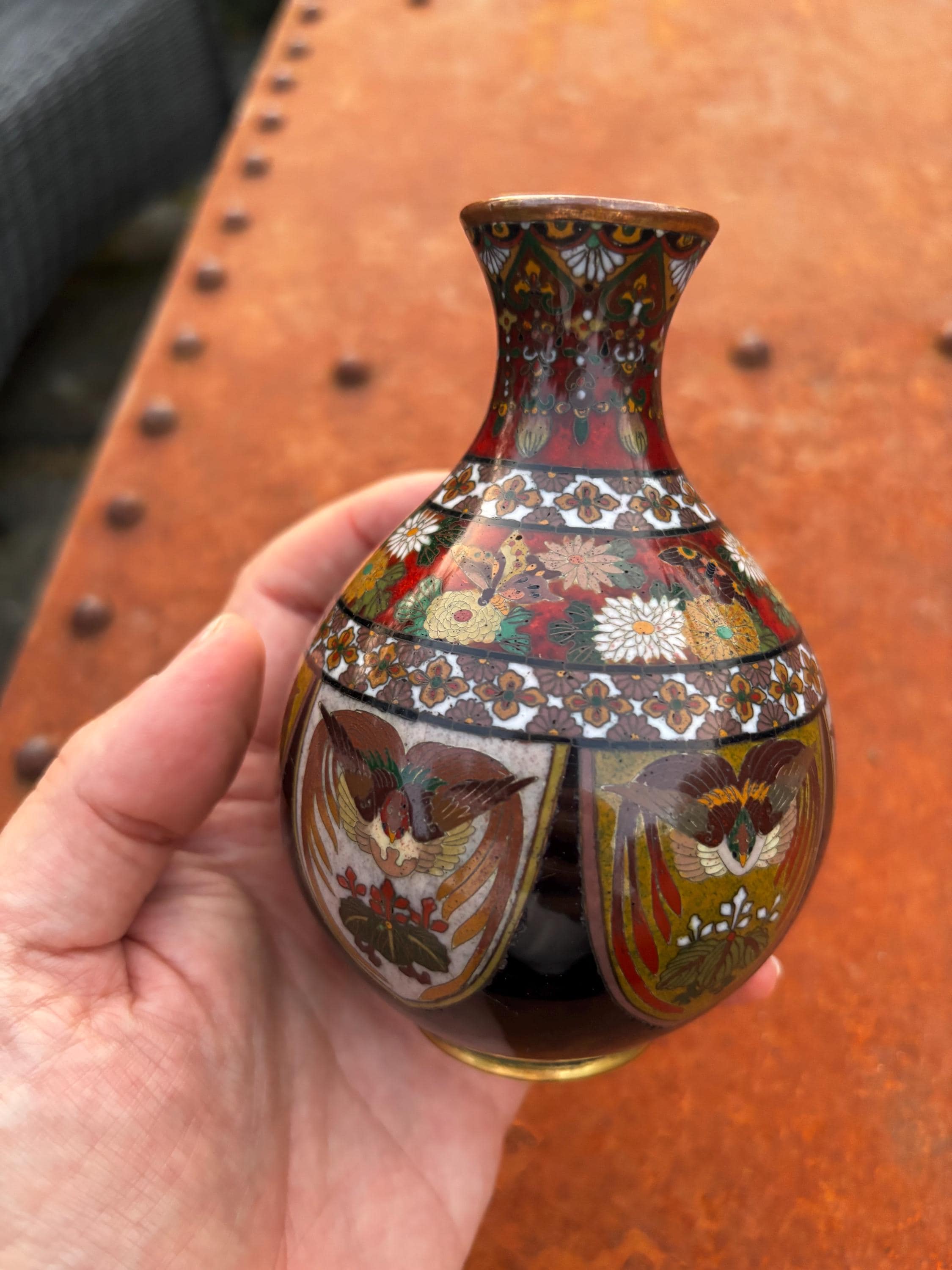
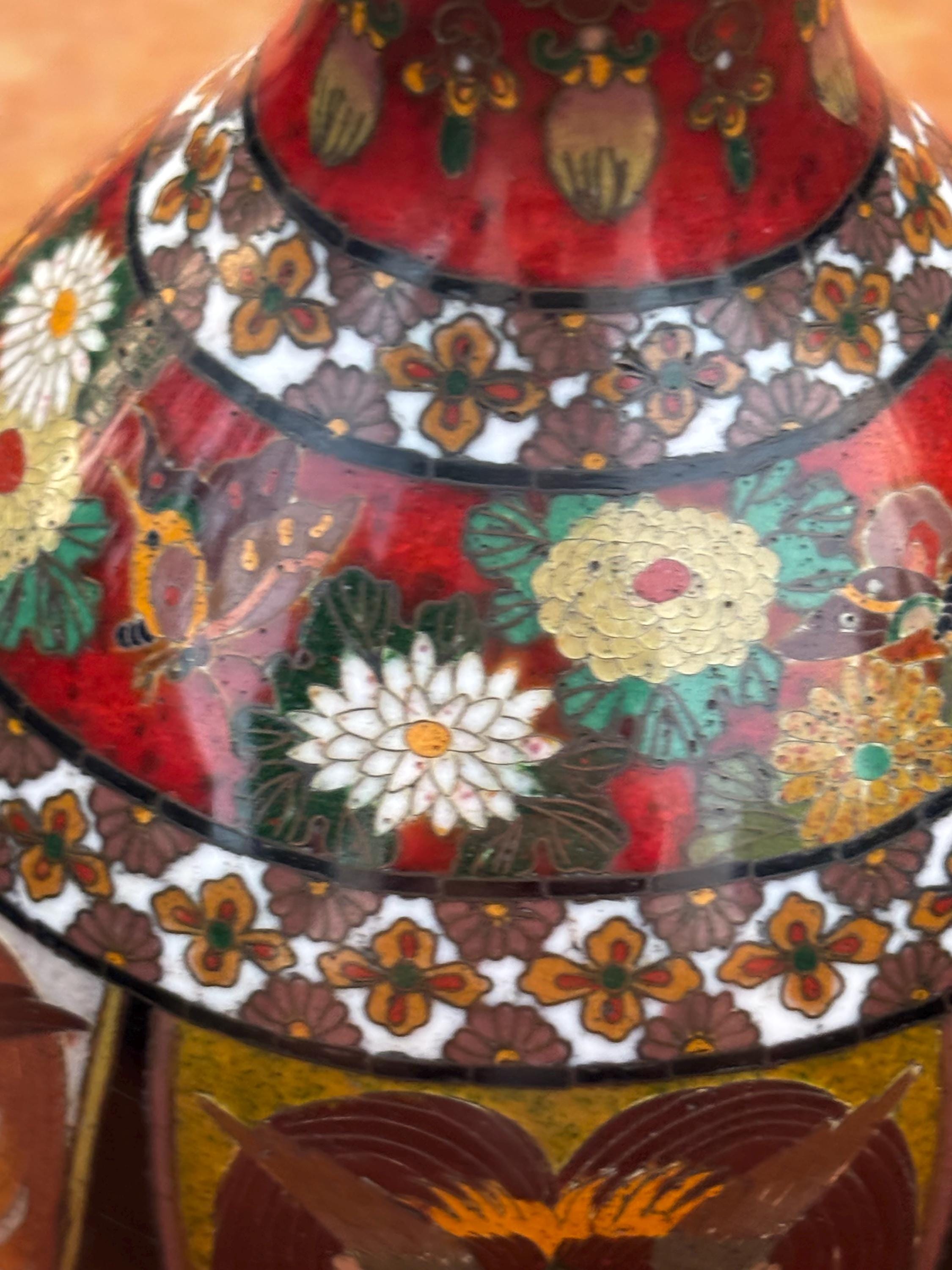
This elegant cabinet vase features four finely executed phoenix medallions alternating around a rich translucent ruby-red ground. Above the birds is an intricate shoulder decorated with butterflies, chrysanthemums, daisies and scrolling floral borders created using remarkably fine silver wire cloisonné. The combination of transparent and opaque enamels produces wonderful depth and luminosity, a characteristic associated with high-quality late Meiji workmanship.
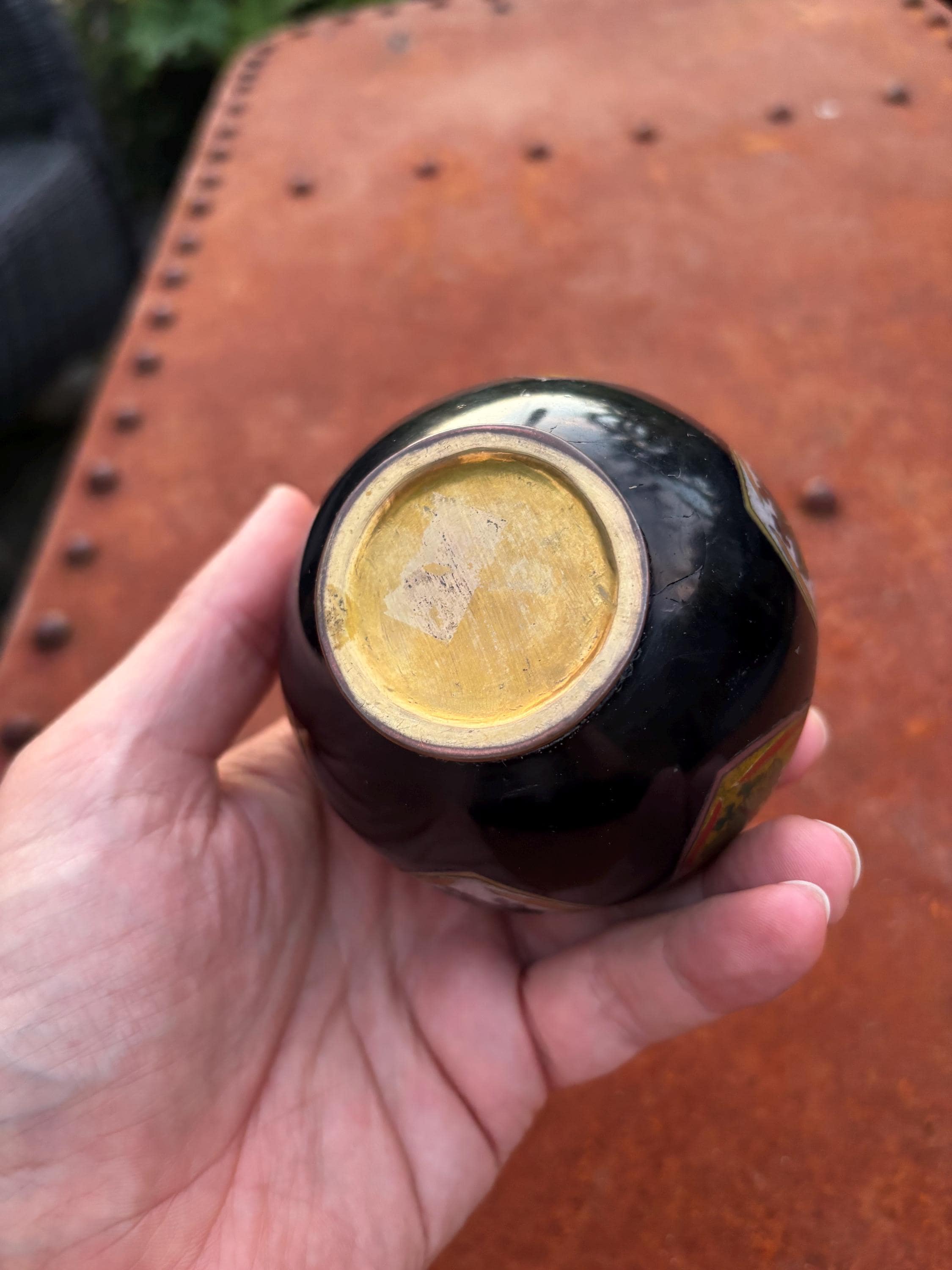
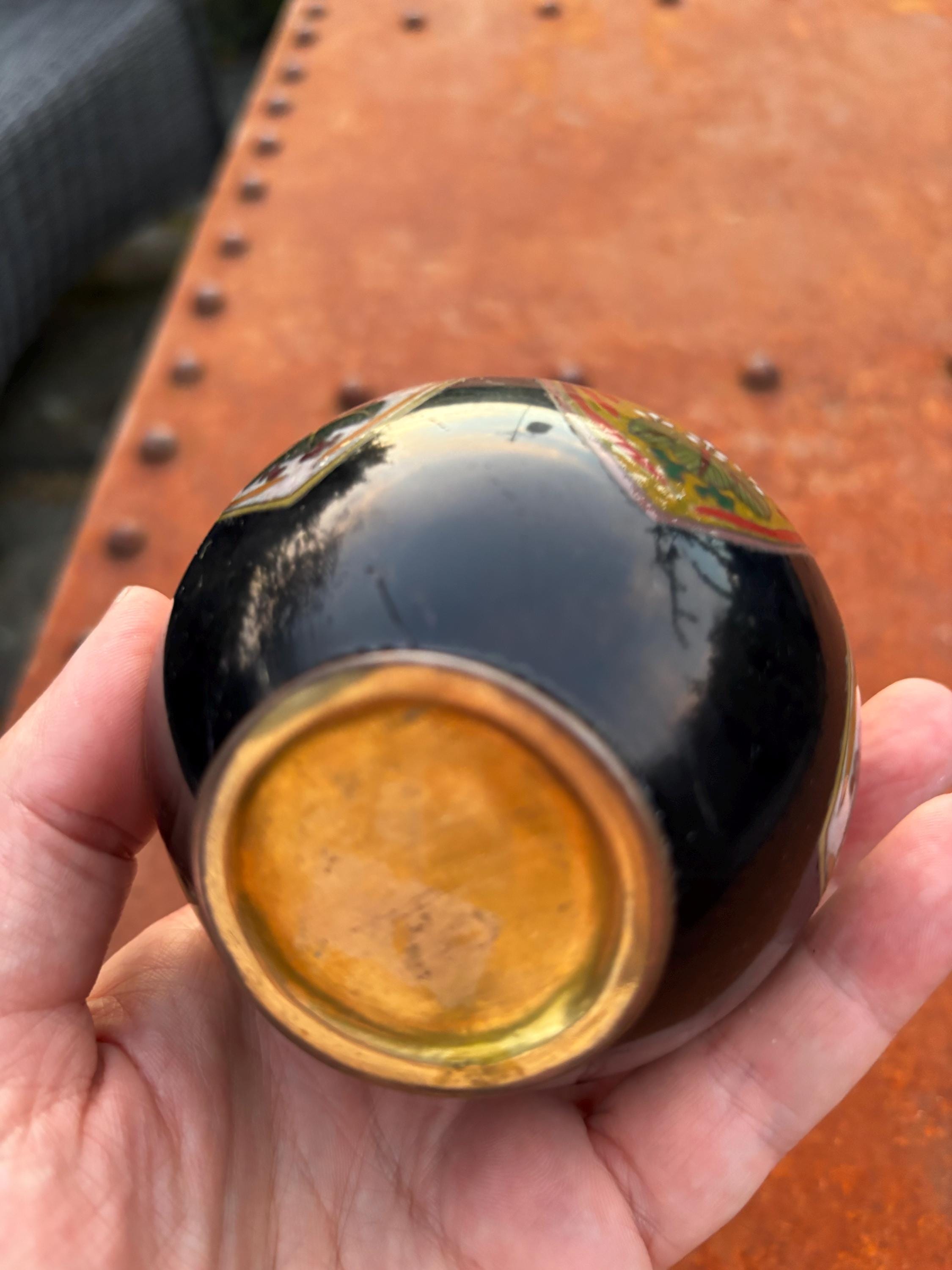
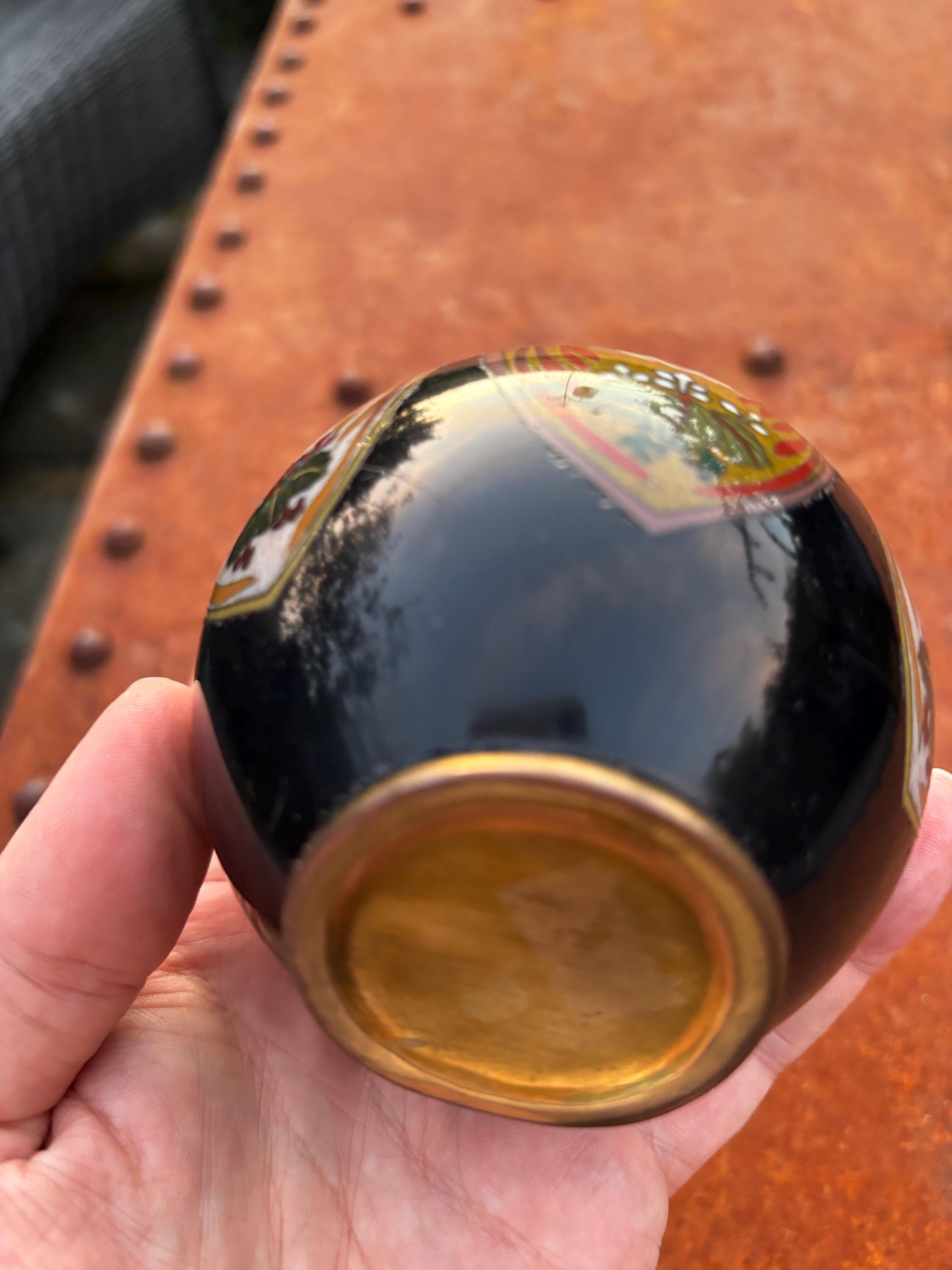
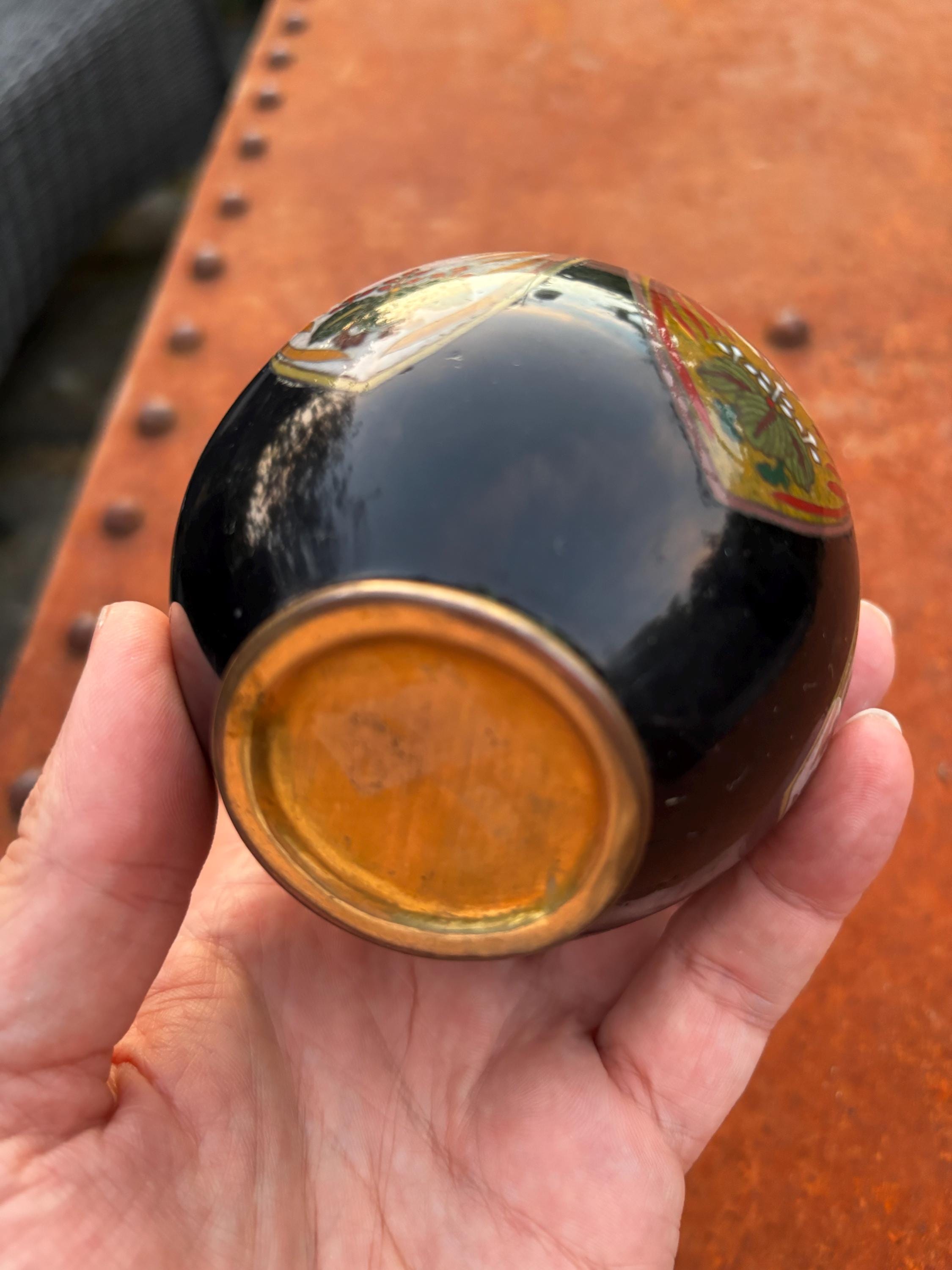
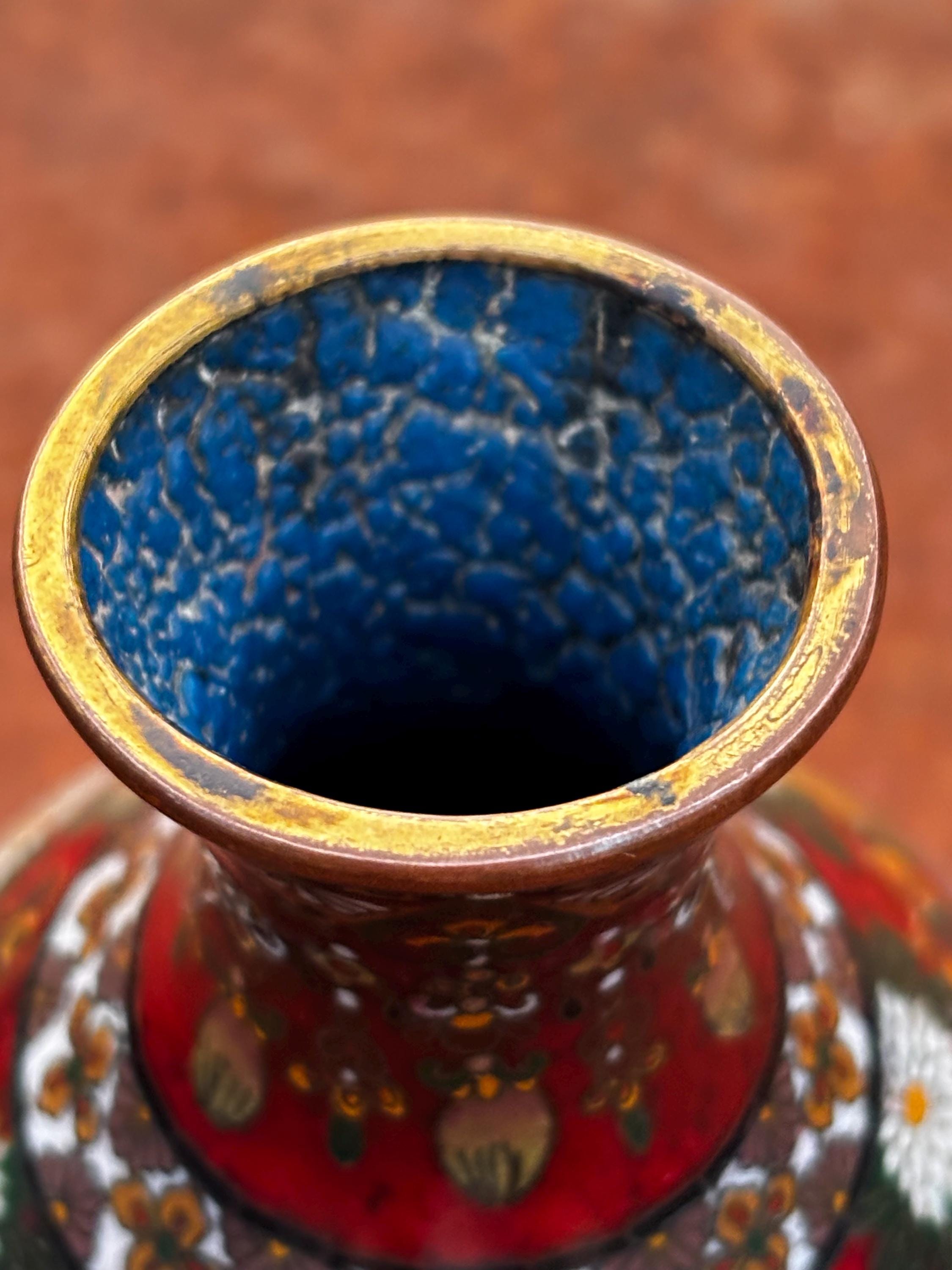
The interior is finished in a deep cobalt blue crackled enamel, while the base retains its original gilt finish, both features commonly found on quality Meiji period export cloisonné.
Although unsigned, the vase displays many of the characteristics collectors look for in superior Meiji cloisonné:
• Authentic late Meiji workmanship (circa 1885-1900)
• Fine silver wire cloisonné construction
• Rich translucent ruby-red enamel ground
• Beautifully detailed Hō-ō (Phoenix) panels
• Chrysanthemum, daisy and butterfly decoration
• Deep cobalt blue enamel interior
• Original gilt foot rim
• Elegant bulbous cabinet form
• Excellent colour and balance throughout
The Hō-ō, often referred to as the Japanese Phoenix, symbolises renewal, peace, prosperity and imperial virtue, making it one of the most celebrated subjects in Japanese decorative arts.
Pieces displaying this level of craftsmanship are becoming increasingly difficult to find, particularly with such vibrant enamels and refined decorative detail. It would make a superb addition to any collection of Japanese cloisonné, Meiji works of art or Asian antiques.
Measurements
• Height: 13 cm
• Width: 9 cm
• Weight: 172 g
The vase is offered in very good antique condition, with only light age-related wear commensurate with its age. Please study the photographs carefully as they form part of the description.
A striking and highly collectible example of late 19th-century Japanese cloisonné craftsmanship.
0 items in your cart