
Antique Cloisonné Dragon Cup Saucer Set | Five-Claw Dragon, Qing Republic Art
$623.16
Antique Chinese Cloisonné Dragon Cup & Saucer
Five-Claw Dragon | Late Qing / Early Republic Period | c.1890–1920
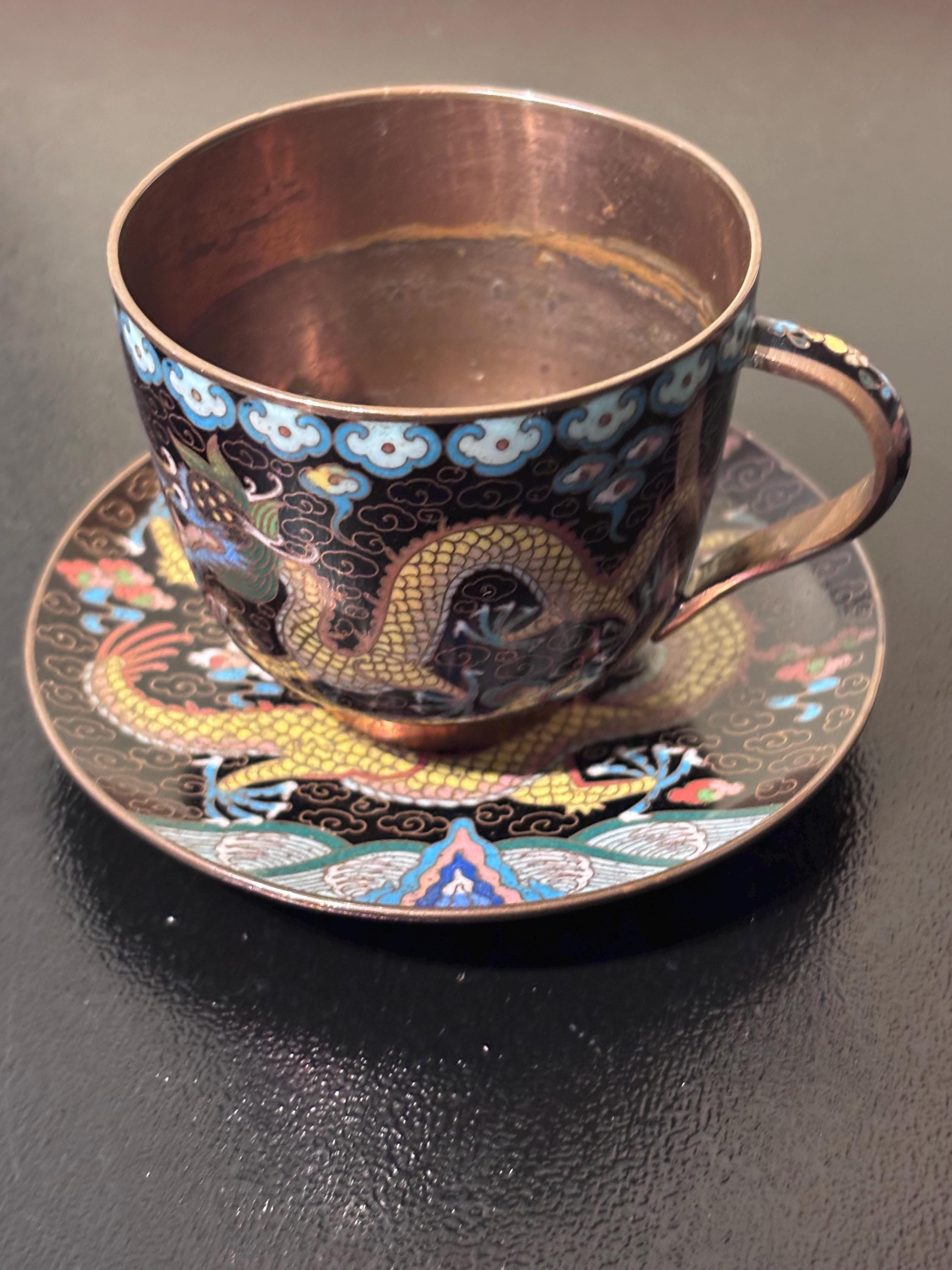
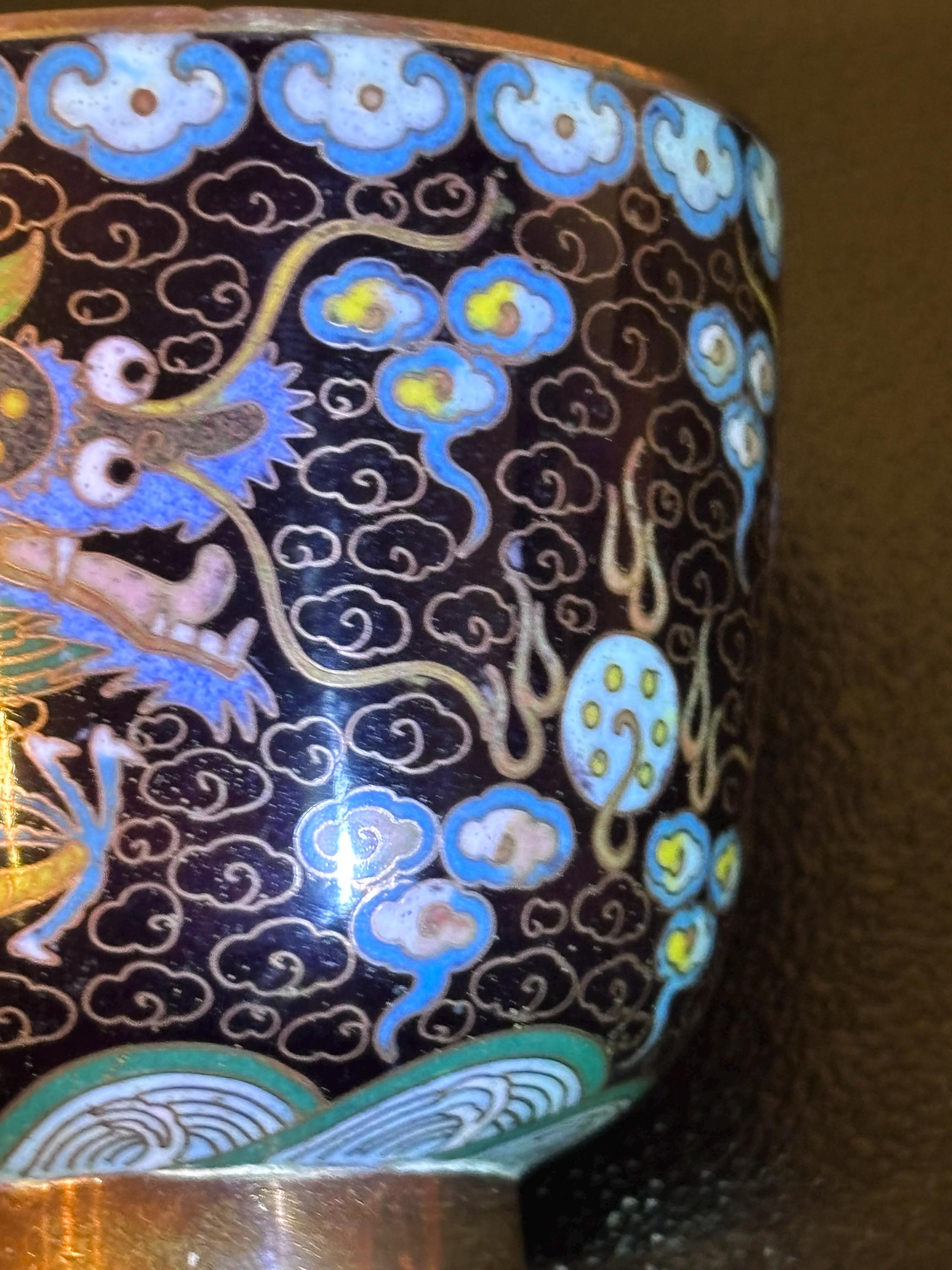
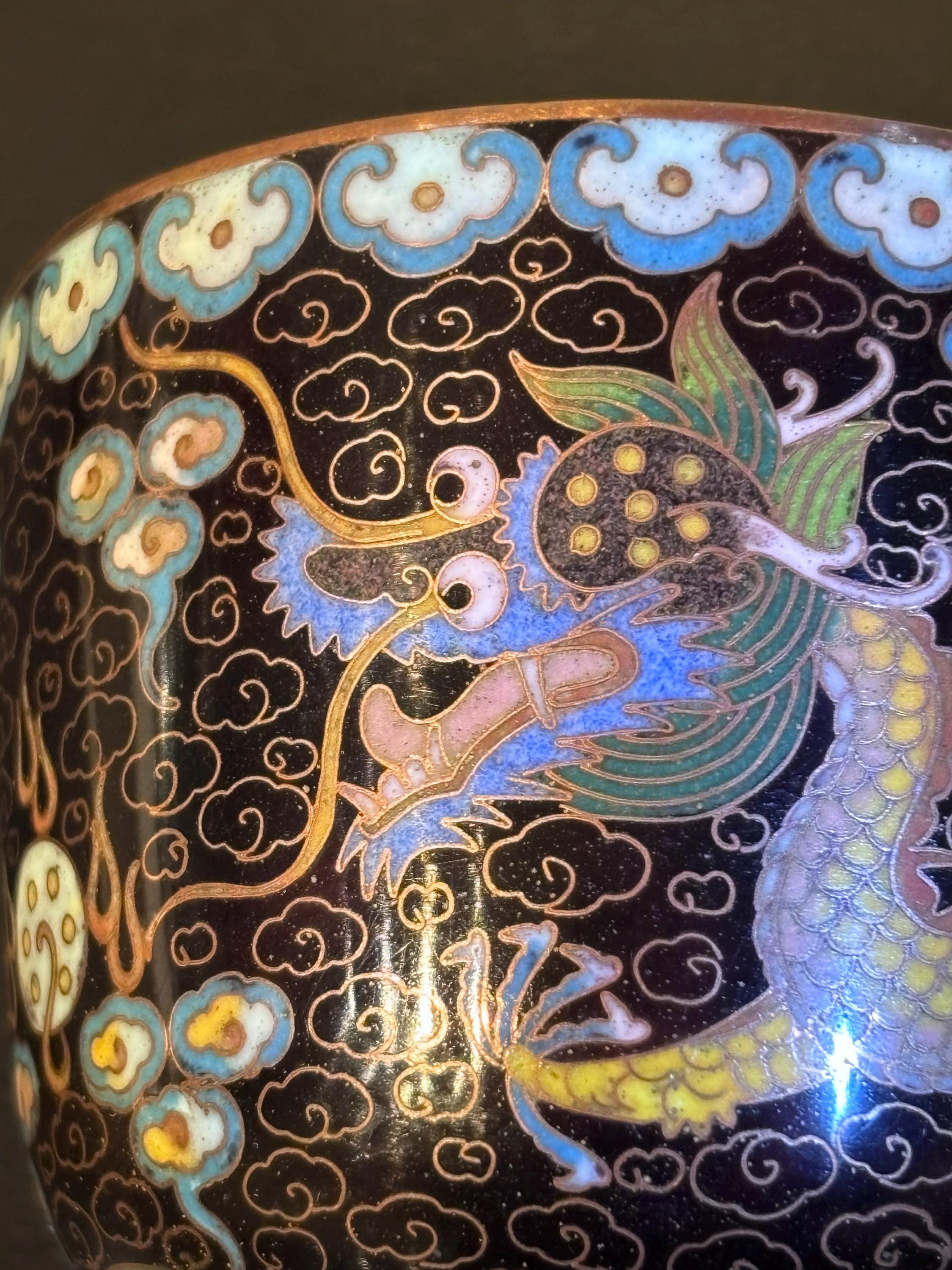
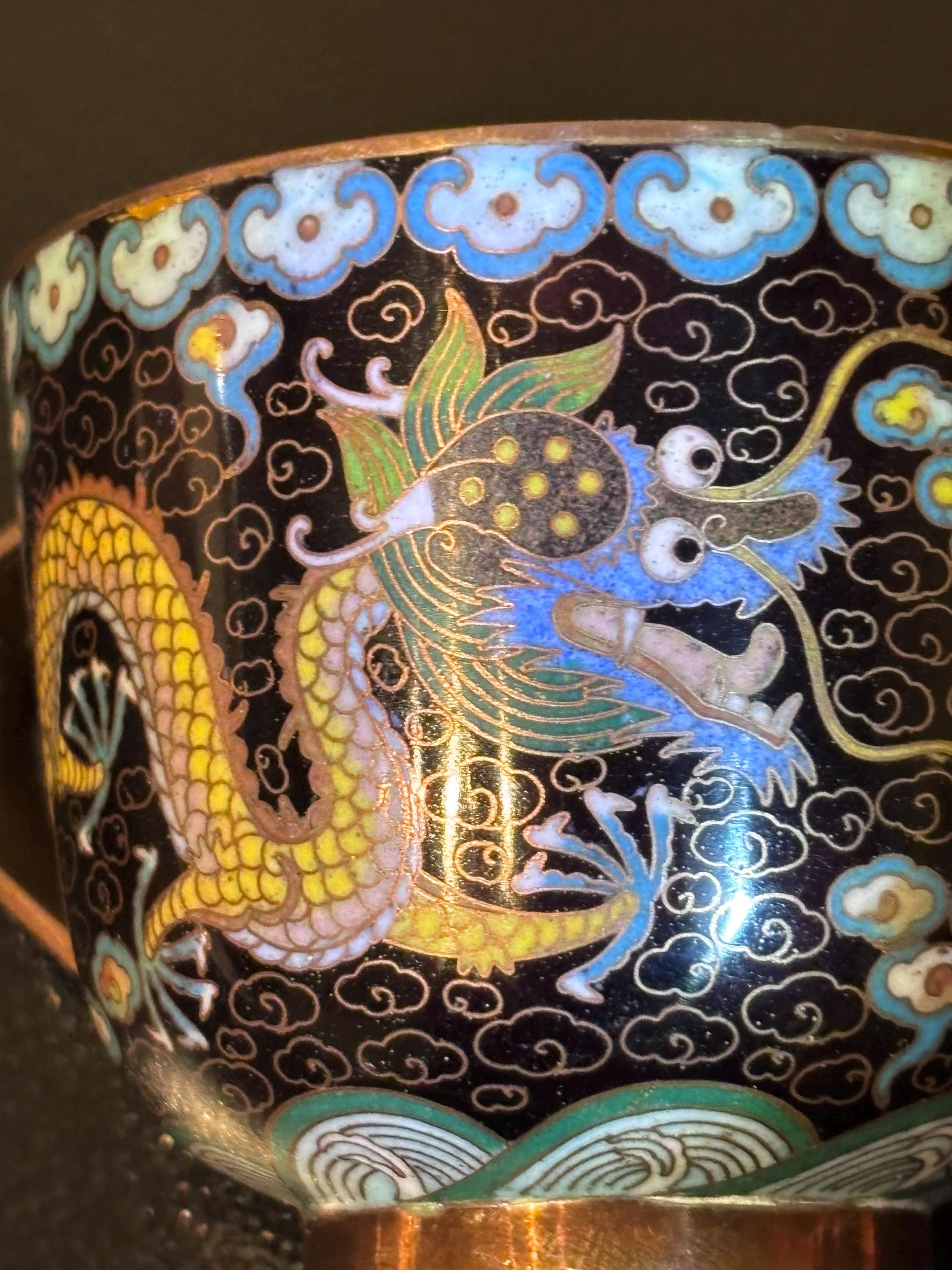
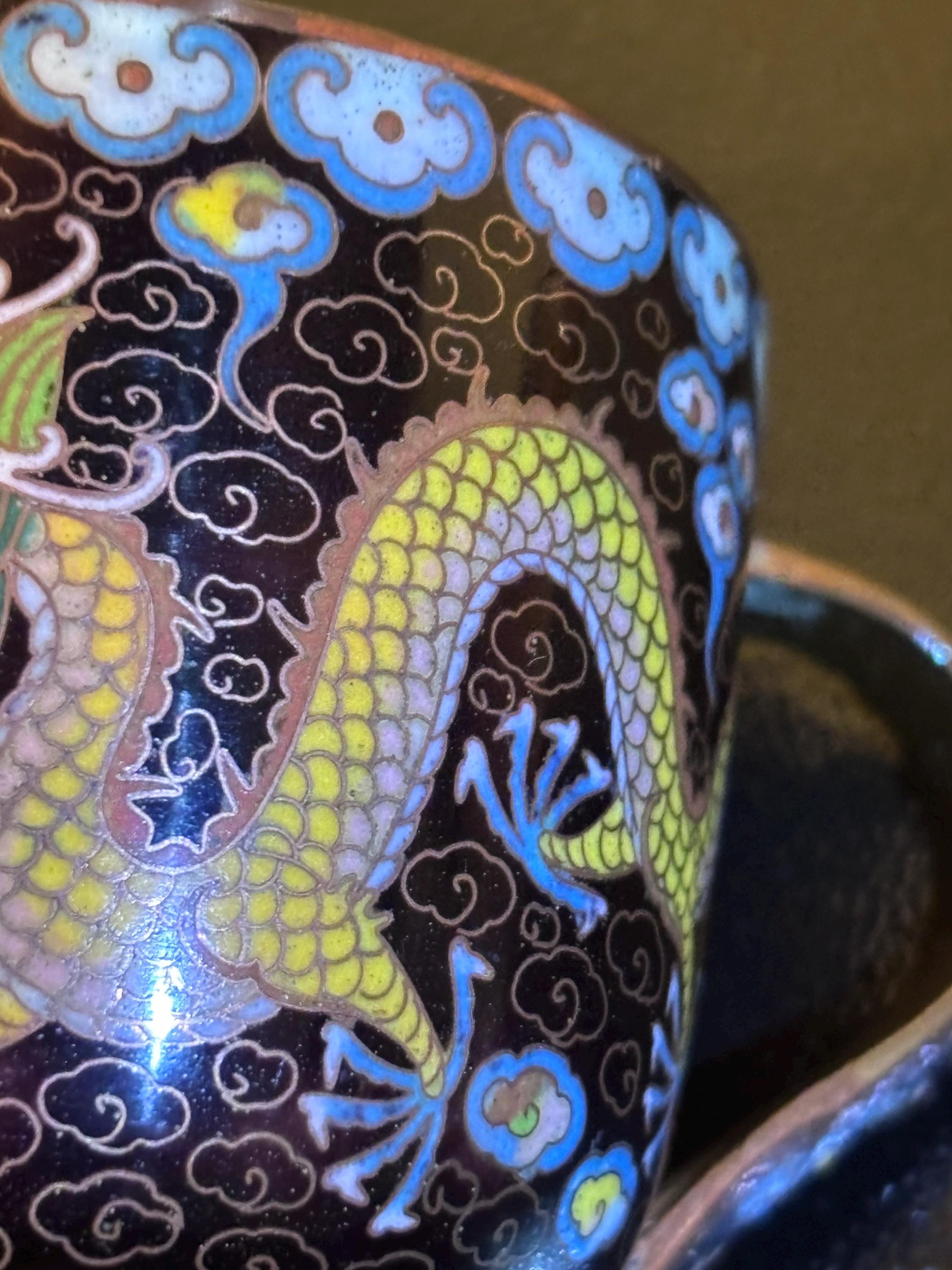
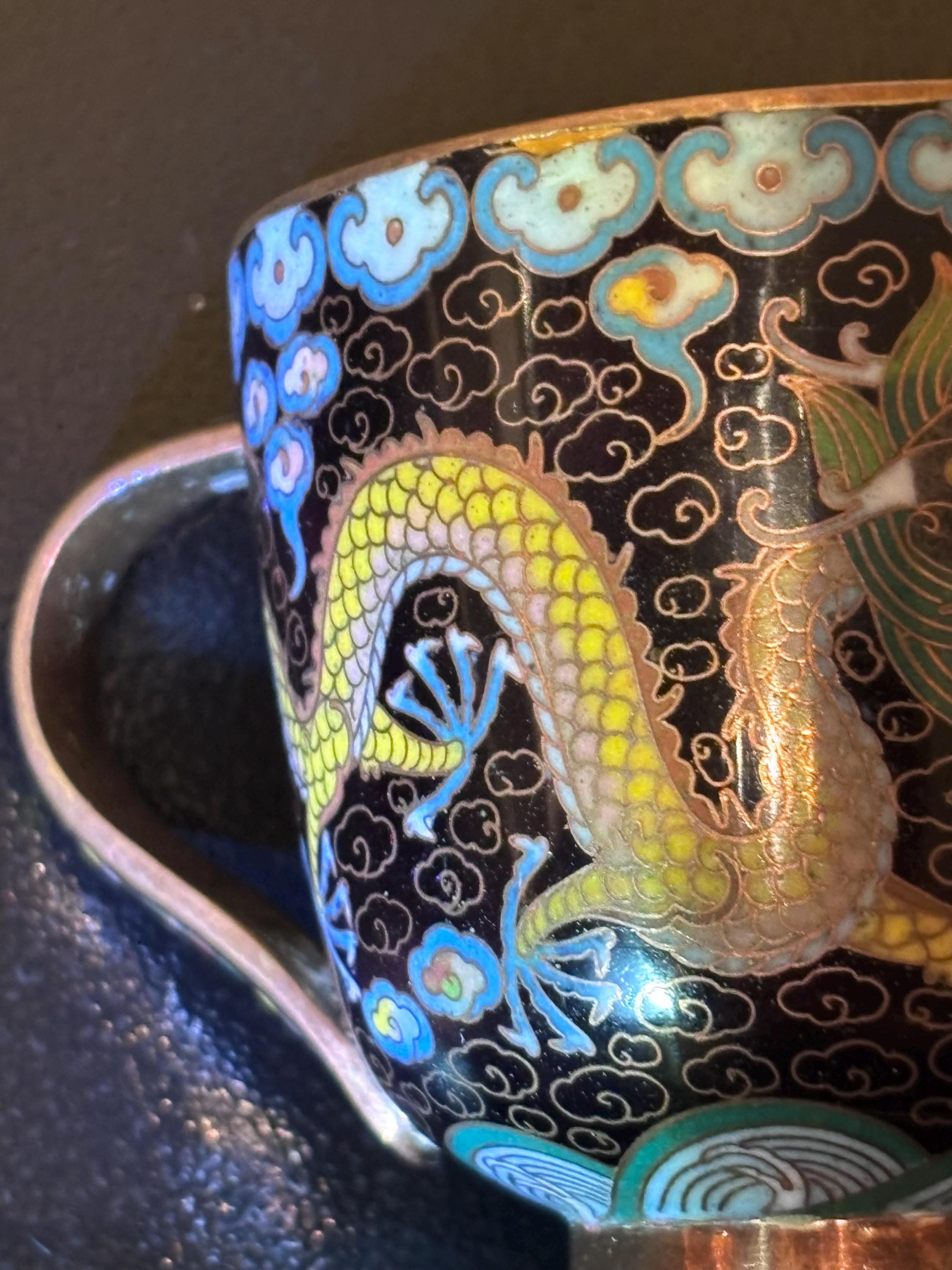
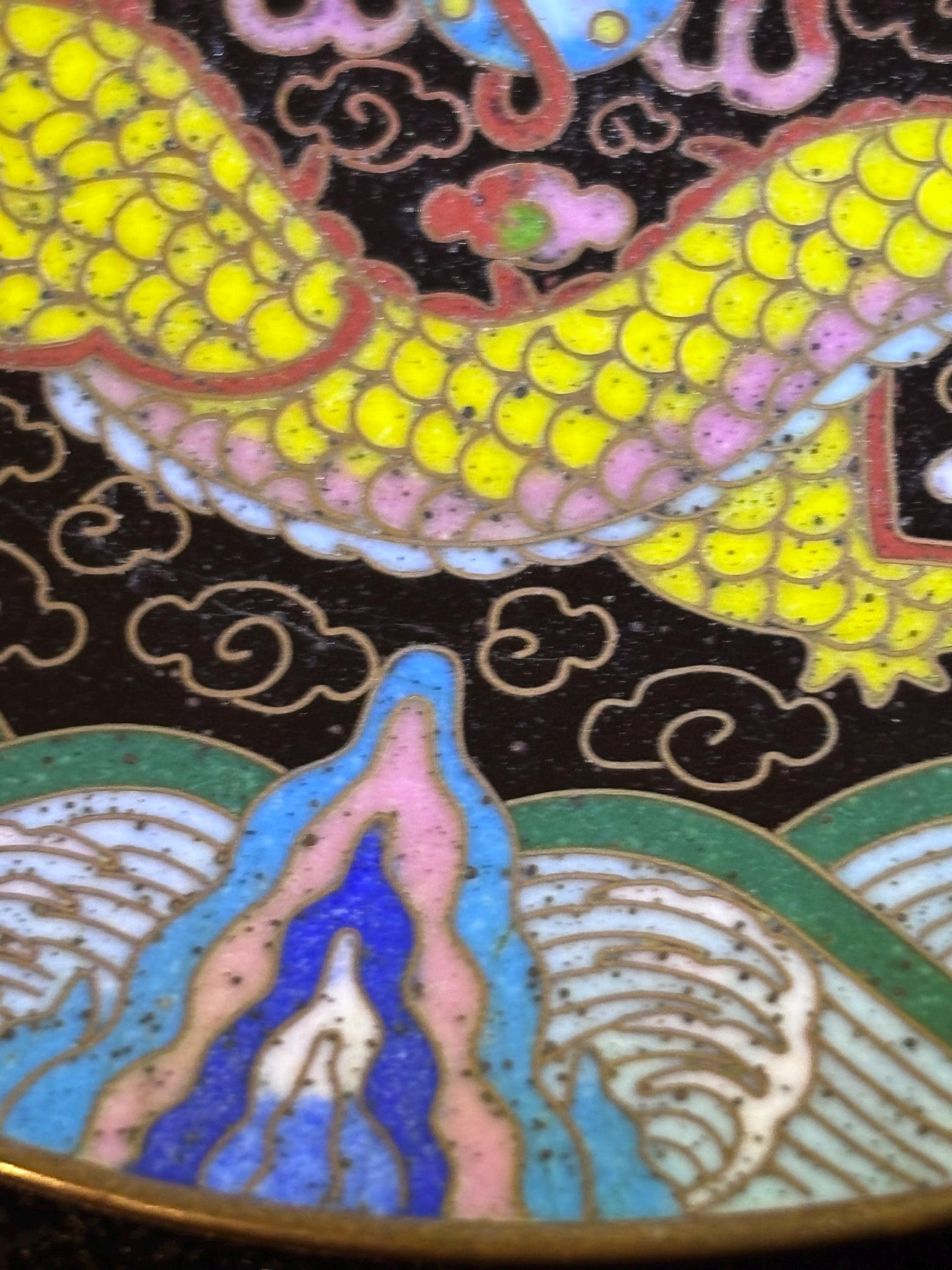
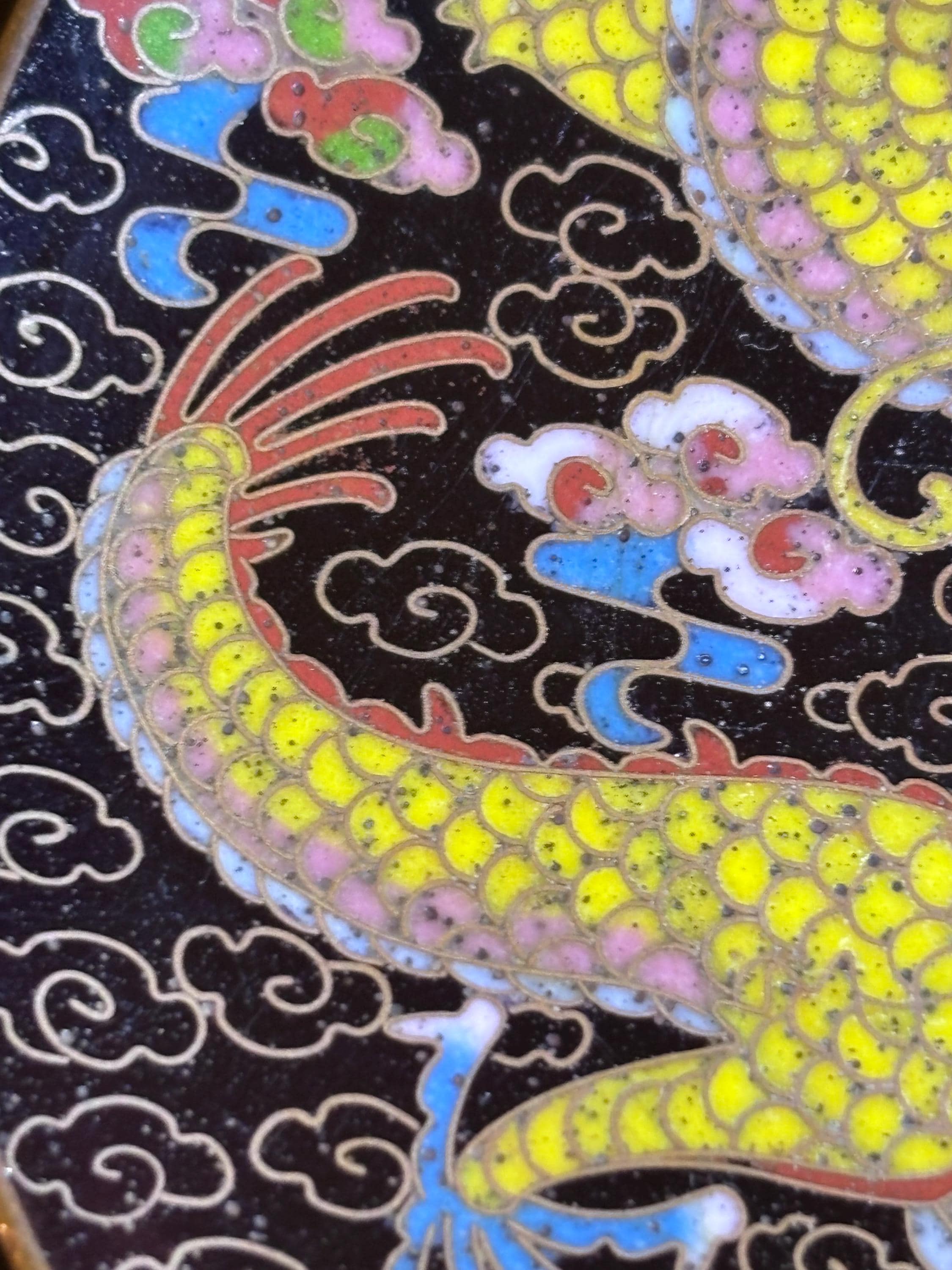
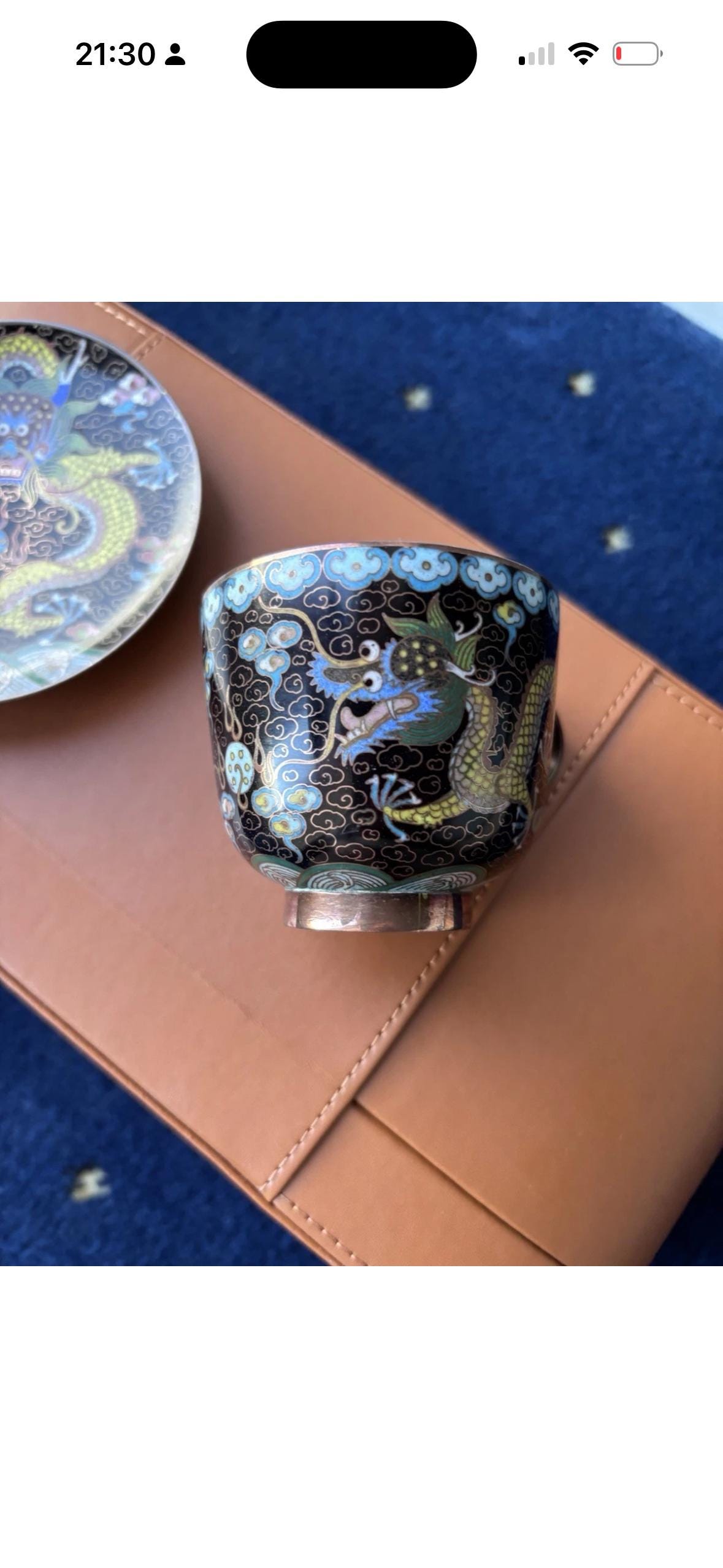
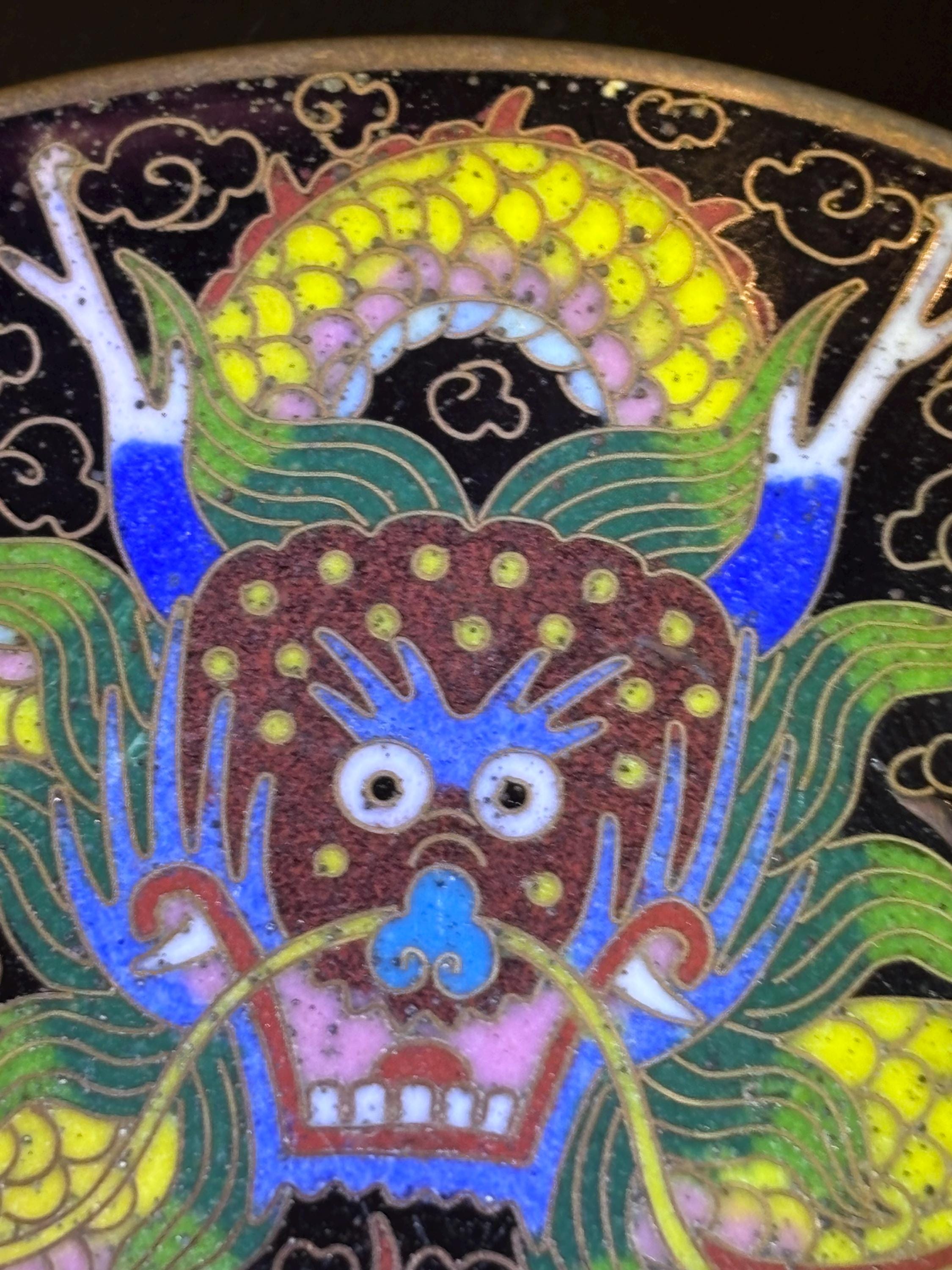
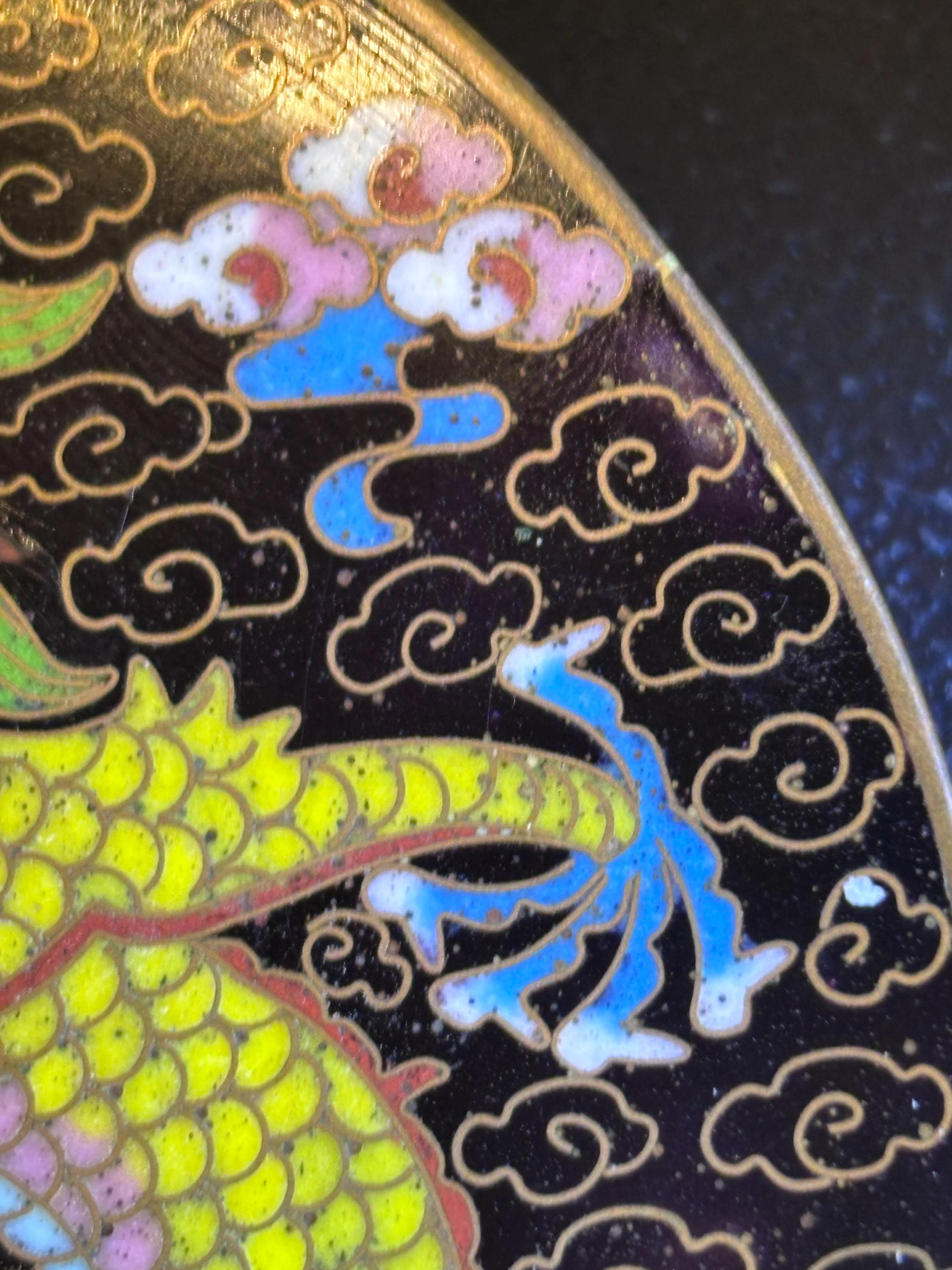
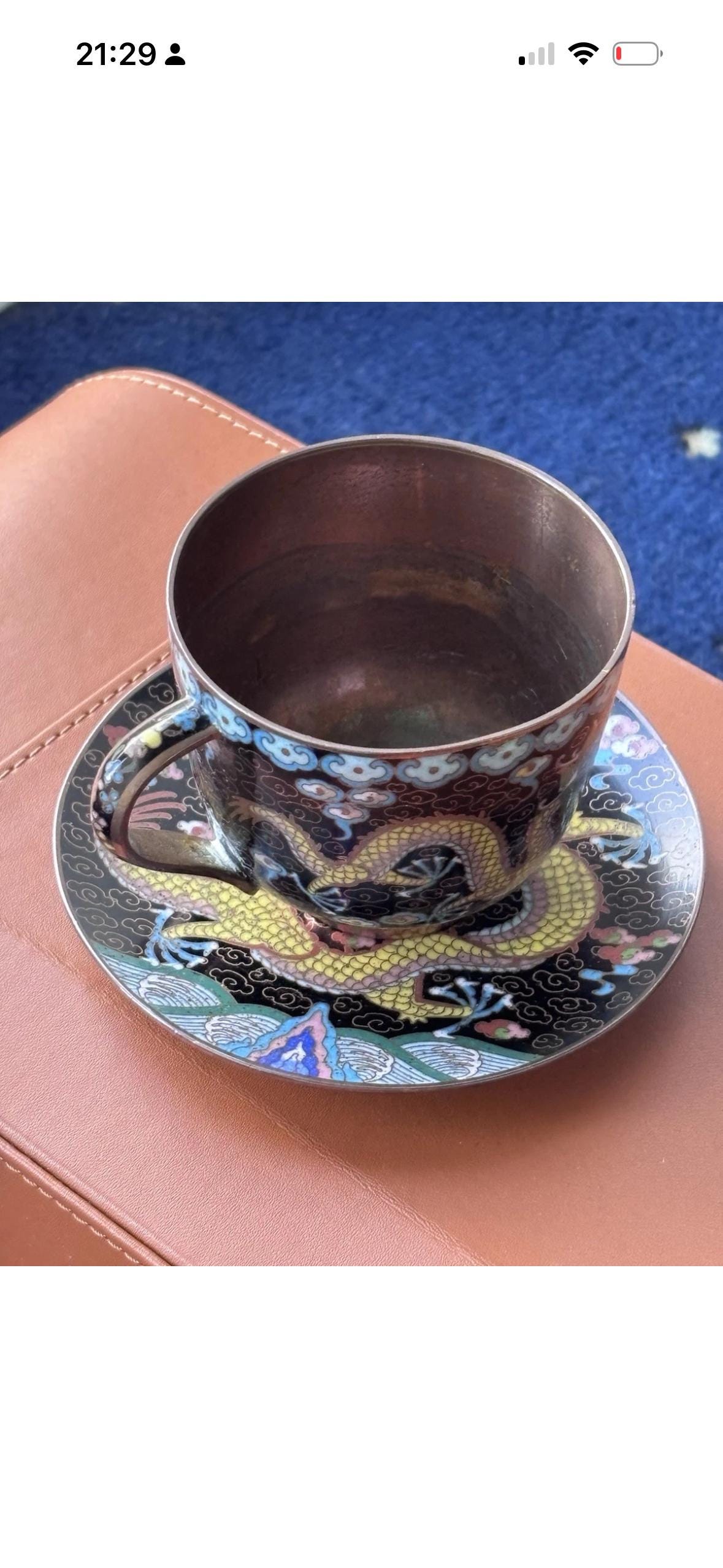
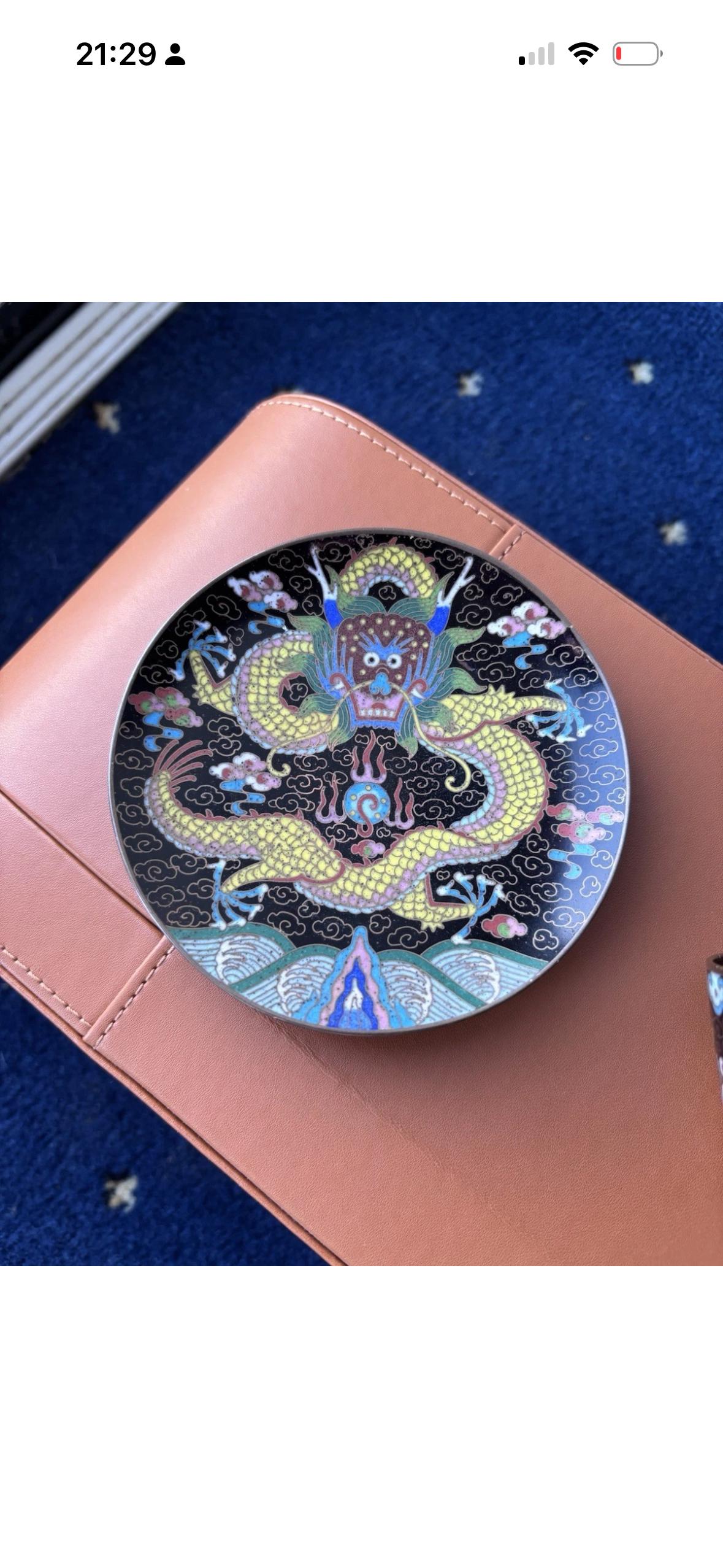
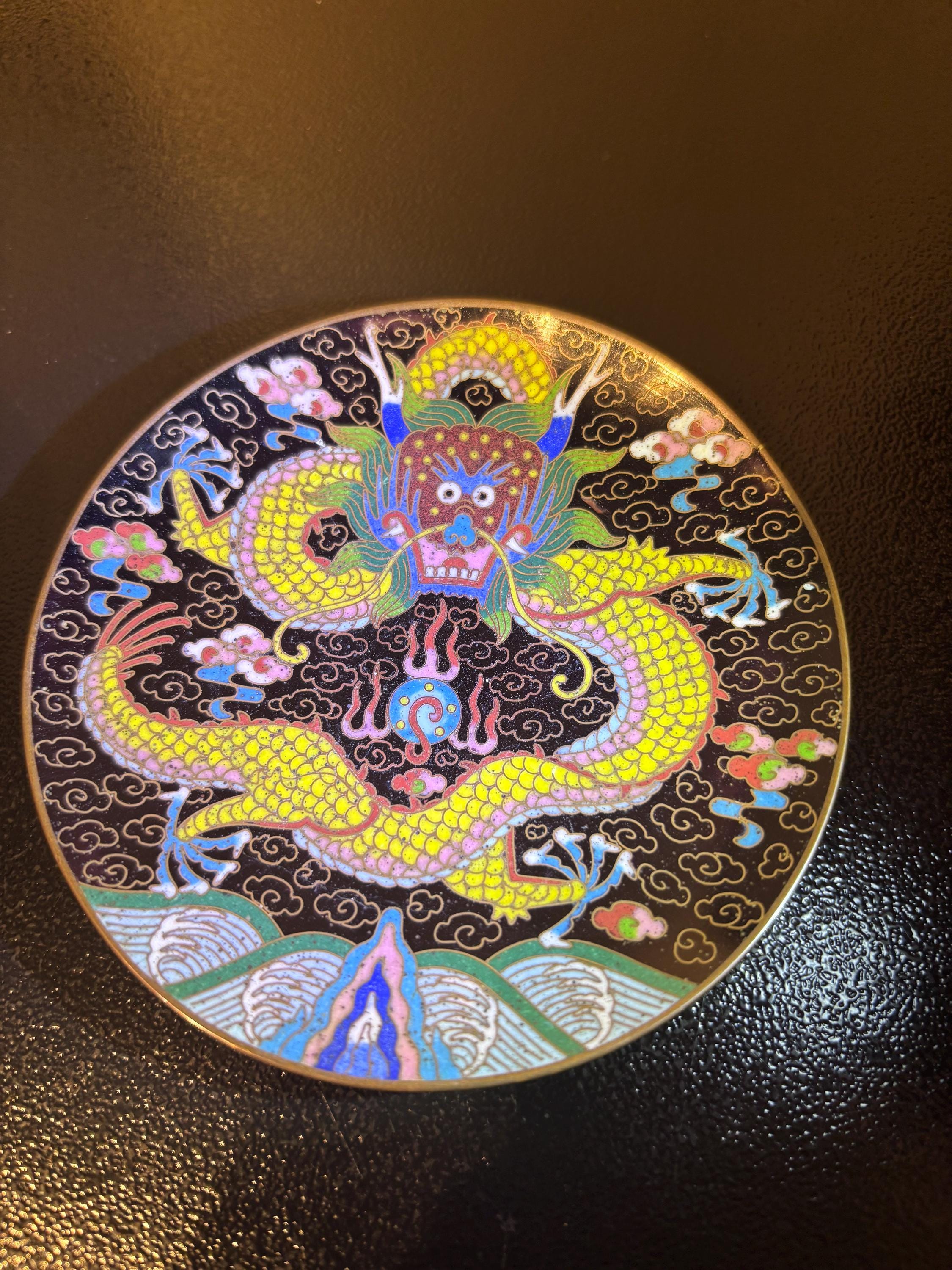
A beautifully detailed antique Chinese cloisonné enamel cup and saucer featuring a powerful five-clawed dragon pursuing the flaming pearl amongst ruyi cloud scrolls on a rich black ground.
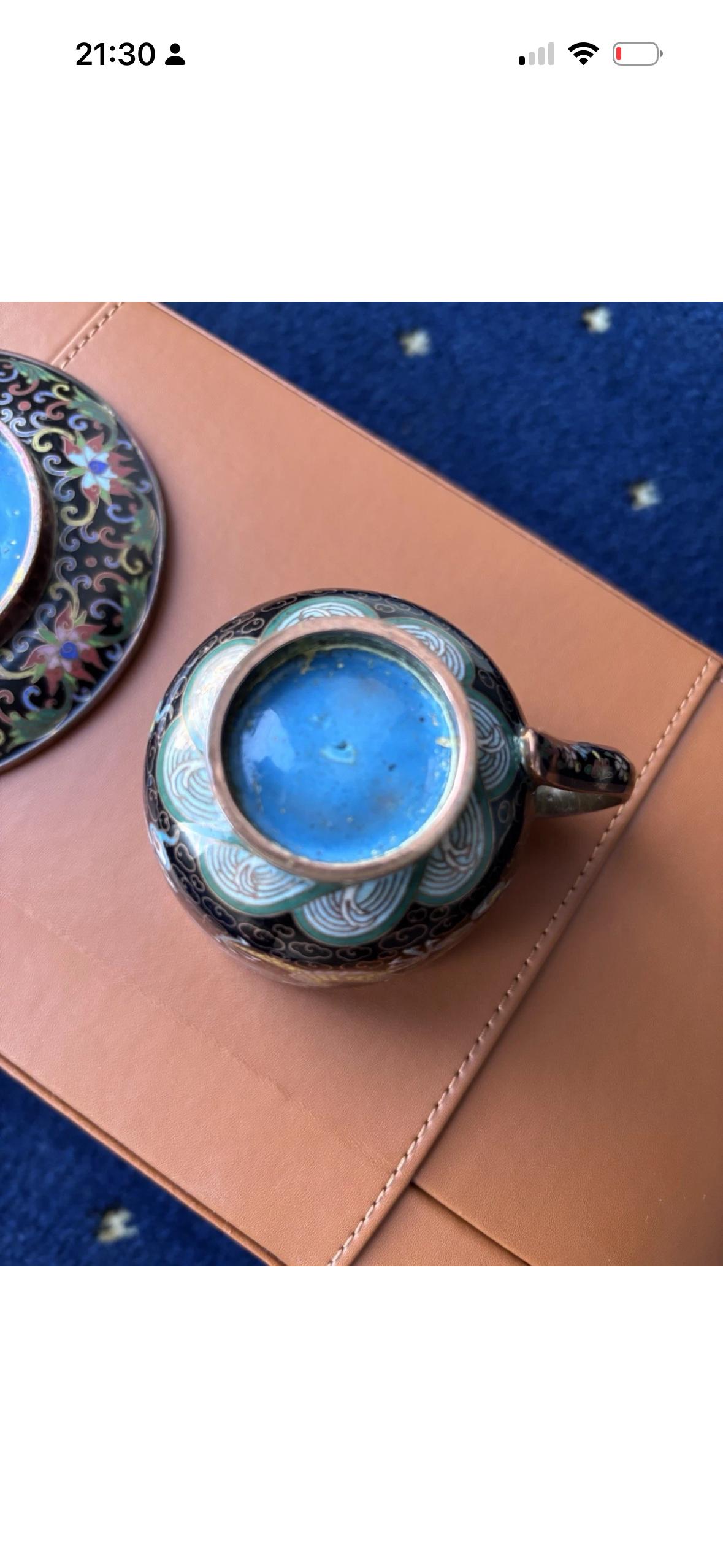
This is an especially striking and atmospheric example of traditional Chinese cloisonné work, combining strong decorative presence with finely executed craftsmanship. The matching cup and saucer remain together as a complete set, something increasingly difficult to find with antique pieces of this nature.
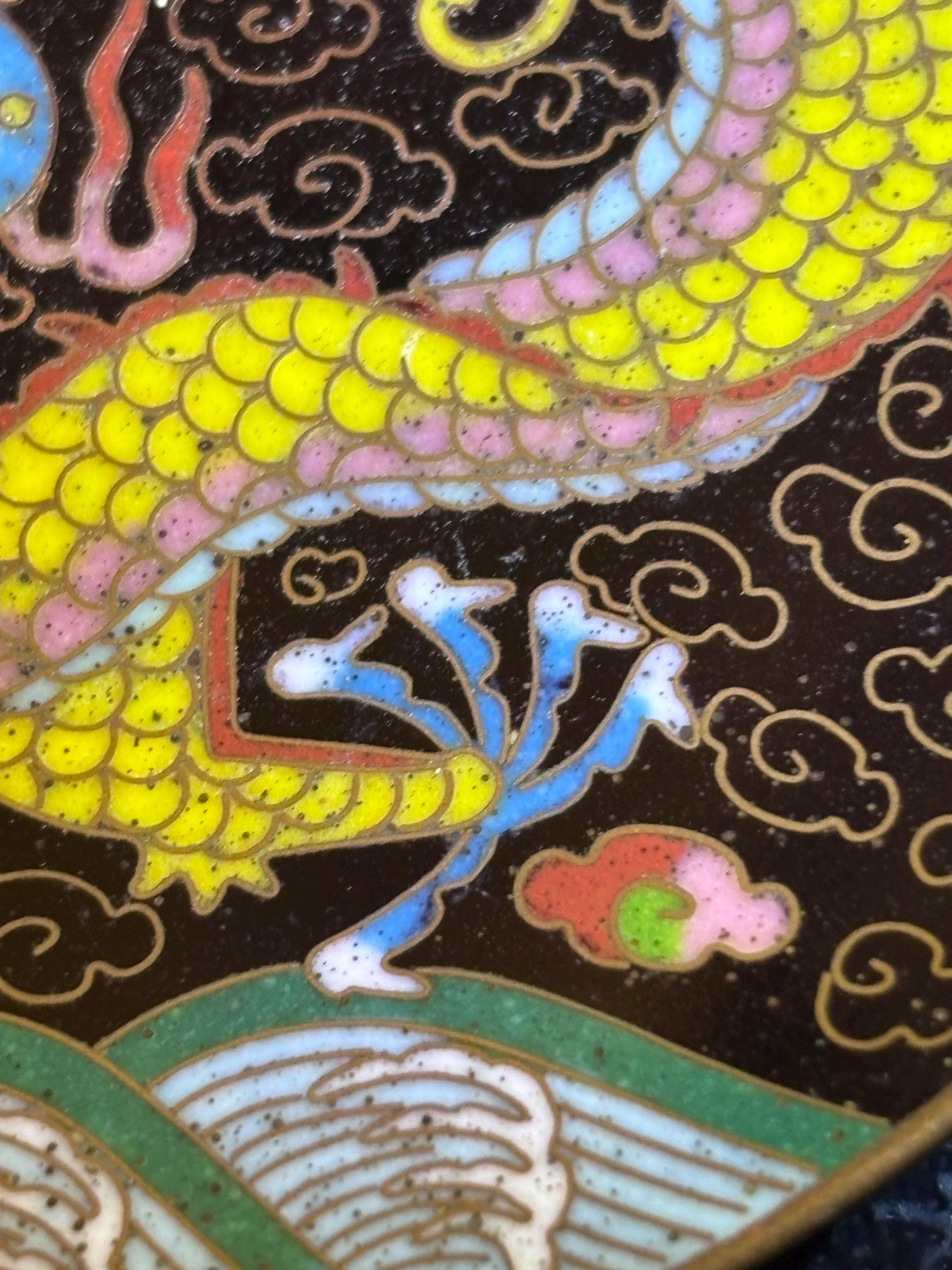
The dragon design is particularly captivating, wrapping dynamically around the body of the cup and extending across the saucer in shimmering enamel colours bordered by delicate hand-laid metal wirework. The five-clawed dragon is one of the most iconic motifs in Chinese decorative arts, historically associated with imperial symbolism, power, wisdom, and protection.
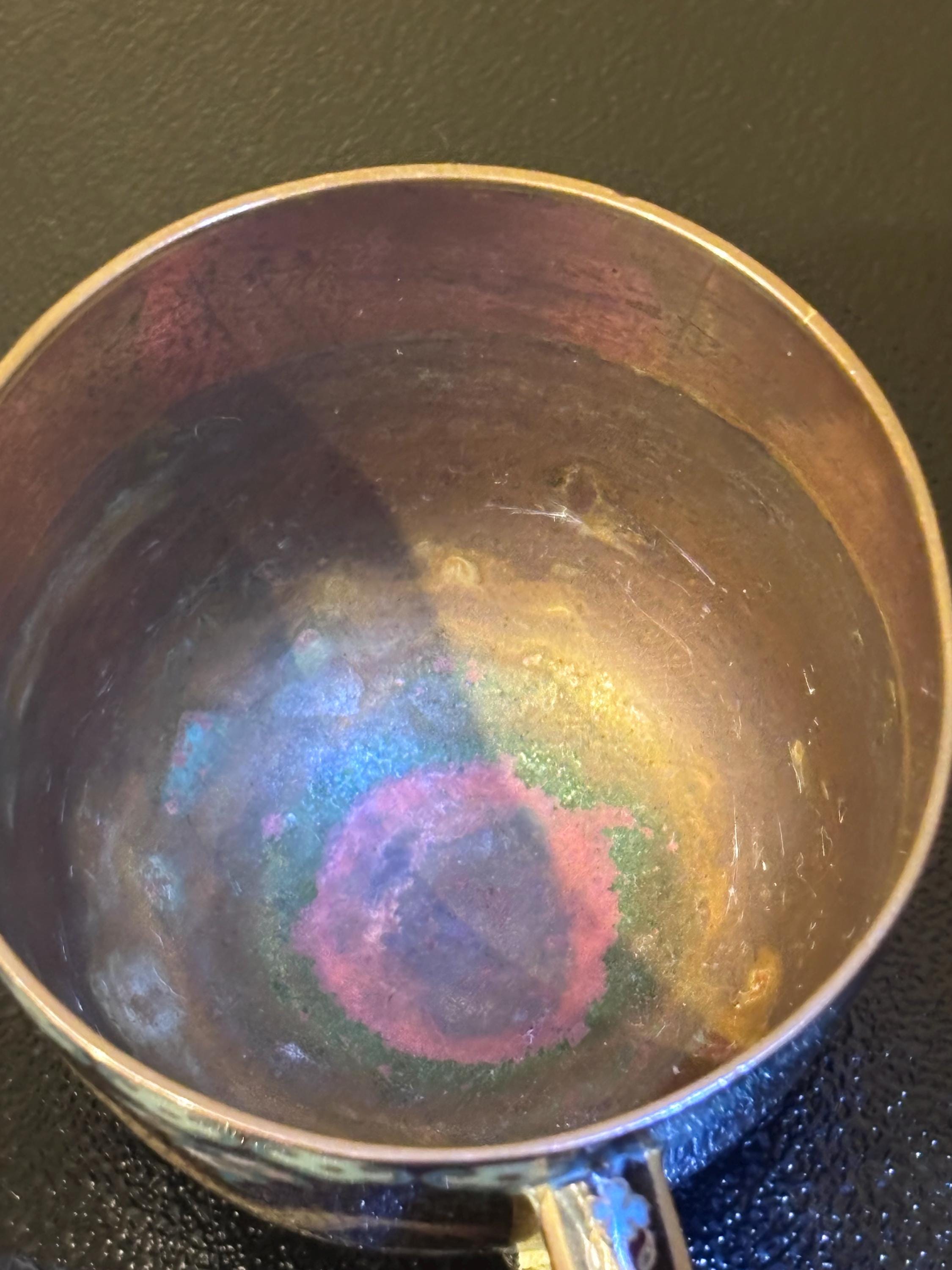
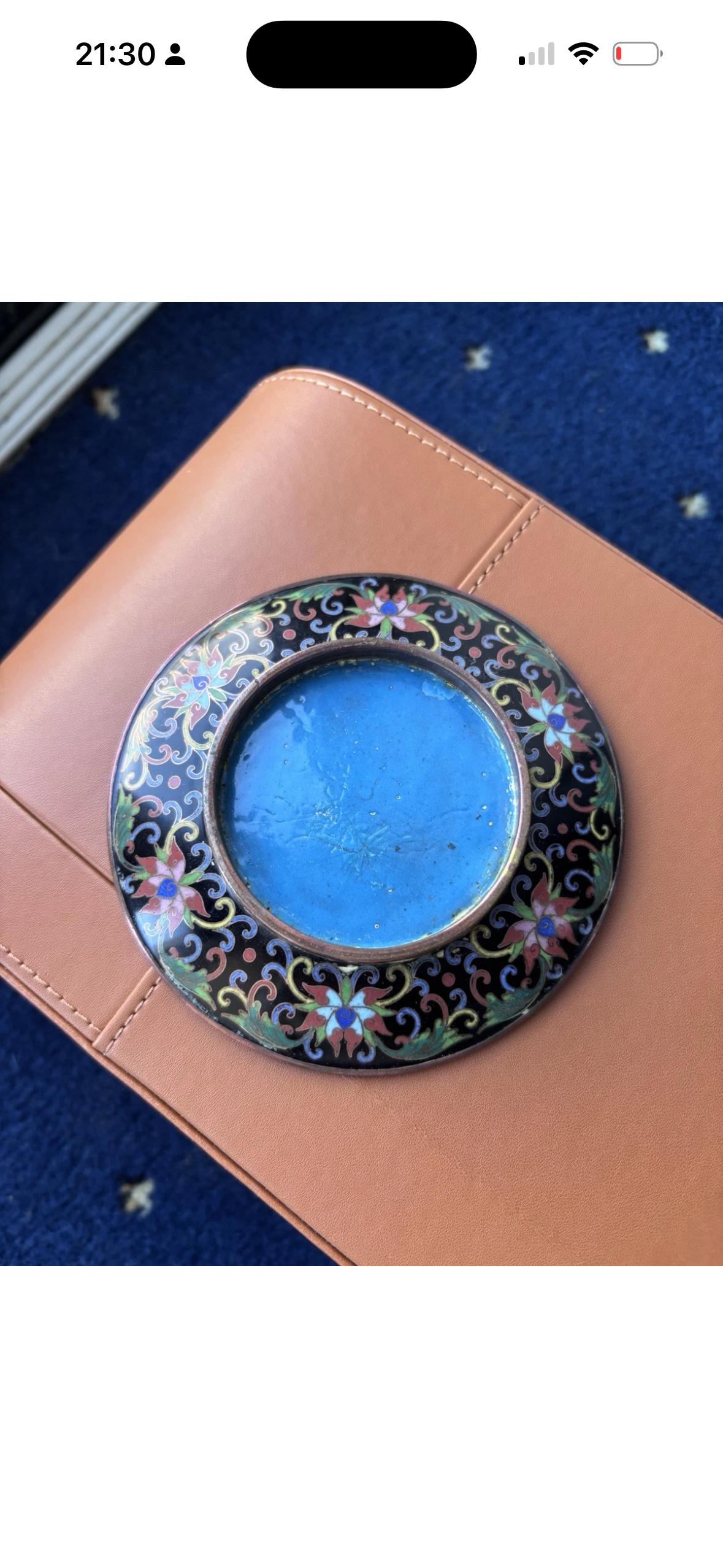
Under close inspection the piece displays many characteristics associated with traditional cloisonné production, including hand-laid wire construction, kiln-fired enamel, subtle variation within the enamel fields, and age-related micro-pitting visible under magnification. The interior of the cup also shows genuine age-related oxidation and patina from use, adding warmth, authenticity, and character impossible to replicate convincingly in modern decorative reproductions.
Unlike more commonly encountered cloisonné vases or trinket pieces, this cup and saucer form feels unusually intimate and display-worthy, making it equally suited to a collector’s cabinet, study, library, or carefully curated interior.
Approximate Dimensions
• Cup diameter: 7 cm
• Saucer diameter: 10.5 cm
Condition
Good antique condition overall with age-related wear consistent with period examples. Minor wear to the gilt metal edges and natural interior patina/oxidation from age and use. No major repairs or significant enamel loss observed.
Please study all photographs carefully as they form an important part of the description and condition report.
Dating
Based on construction, decorative style, enamel work, and overall character, the piece is most consistent with late Qing Dynasty to early Republic period cloisonné work, circa 1890–1920.
A wonderfully decorative and increasingly uncommon piece of antique Asian art with real presence and depth. 🐉
0 items in your cart